Rusa unicolorsambar


Geographic Range
Rusa unicolor are native to India, Pakistan, Ceylon, Burma, Sri Lanka, Philippines, southern China, Taiwan, Malaysia, Borneo, Sumatra, and Java (Medway, 1969). Sambars have also been successfully introduced in Australia, New Zealand, California, Florida and Texas (Nowak, 1999). (Medway, 1969; Nowak, 1999)
- Biogeographic Regions
- nearctic
- palearctic
- oriental
- australian
Habitat
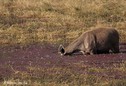
Sambars inhabit both gently sloping and steep forested hillsides. They reside preferably near cultivated areas, such as gardens and plantations, in order to acquire food, but are also found in thick forests, swamp forests, and open scrub (Payne et al., 1985). Some of these deer may move between higher altitudes in the summer to lower, more sheltered areas during the winter months (Nowak, 1999). (Nowak, 1999; Payne, et al., 1985)
- Habitat Regions
- temperate
- tropical
- terrestrial
- Terrestrial Biomes
- forest
- scrub forest
- Wetlands
- swamp
- Other Habitat Features
- agricultural
-
- Range elevation
- 0 to 3700 m
- 0.00 to 12139.11 ft
Physical Description
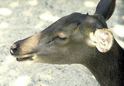
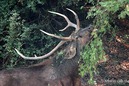
Sambars have a coarse coat of short, dark hair with lighter brown to creamy white hair on their undersides (Tate, 1947). The backsides and undersides of their bushy tails are white, and when raised, the tails are used as signals (Nowak, 1999). Males are generally larger than females and posess a dense mane on their necks. Male Sambars have antlers with three or four tines, and these antlers are periodically shed and replaced. Antlers can reach lengths of up to 100 cm. The maximum size for males is 185-260 kg, and about 162 kg for females (Medway, 1969). (Medway, 1969; Nowak, 1999; Tate, 1947)
- Other Physical Features
- endothermic
- homoiothermic
- bilateral symmetry
- Sexual Dimorphism
- male larger
- ornamentation
-
- Range mass
- 109 to 260 kg
- 240.09 to 572.69 lb
-
- Range length
- 1620 to 2460 mm
- 63.78 to 96.85 in
Reproduction
Male Sambars are solitary and very agressive during the breeding season, while females may be found in groups of up to 8 individuals (Nowak, 1999). Their mating system is polygynous, with one male mating with as many females as he can. (Nowak, 1999)
- Mating System
- polygynous
Sambars have no specific breeding season, but breeding most commonly occurs from September through January. Usually only one fawn is born at a time, and the gestation period is about 9 months. (Medway, 1969). At birth, Rusa unicolor are very active and have brown hair with lighter spots, which are soon lost shortly (Medway,1969). Fawns weigh about 10 kg at birth. Males develop small antlers at one to two years; at three years antlers have two points, and adult males have antlers with three or four points (Payne et al., 1985). Females reach sexual maturity at approximately two years of age (Nowak, 1999). Males are aggressive towards one another during the mating season and actively defend territories, mating with multiple females that enter the area. Males mark their territory with scent glands, and as many as 8 females at a time may remain with one male within his range (Nowak, 1999). (Medway, 1969; Nowak, 1999; Payne, et al., 1985)
- Key Reproductive Features
- iteroparous
- year-round breeding
- gonochoric/gonochoristic/dioecious (sexes separate)
- sexual
- viviparous
-
- Breeding interval
- Sambars breed once yearly.
-
- Breeding season
- Sambars have no specific breeding season, but breeding most commonly occurs from September through January.
-
- Range number of offspring
- 1 to 2
-
- Average number of offspring
- 1
-
- Range gestation period
- 8 to 9 months
-
- Range weaning age
- 12 to 24 months
-
- Average age at sexual or reproductive maturity (female)
- 2 years
-
- Average age at sexual or reproductive maturity (male)
- 2 years
Fawns are born weak but able to walk. They remain with their mother for 1-2 years. (Medway, 1969)
- Parental Investment
- precocial
-
pre-fertilization
- provisioning
-
protecting
- female
-
pre-hatching/birth
-
provisioning
- female
-
protecting
- female
-
provisioning
-
pre-weaning/fledging
-
provisioning
- female
-
protecting
- female
-
provisioning
-
pre-independence
-
protecting
- female
-
protecting
- post-independence association with parents
Lifespan/Longevity
In captivity, Rusa unicolor can live for over 26 years, but in the wild the average lifespan is about 20 years (Nowak, 1999). (Nowak, 1999)
-
- Range lifespan
Status: captivity - 26 (high) years
- Range lifespan
-
- Average lifespan
Status: wild - 20 years
- Average lifespan
Behavior
Sambars are mostly nocturnal, resting during the day in heavy forest cover (Medway, 1969). These deer are solitary but may be found in small groups during the mating season. Also, groups of up to 6 females with dependent young may travel together (Payne et al., 1985). Males are nomadic and establish territories primarily during breeding seasons. All sambars are proficient swimmers (Nowak, 1999). (Medway, 1969; Nowak, 1999; Payne, et al., 1985)
- Key Behaviors
- cursorial
- terricolous
- nocturnal
- crepuscular
- motile
- nomadic
- solitary
- territorial
- social
Communication and Perception
Food Habits
Sambars generally feed at dusk or at night, and they browse on leaves, berries, grasses, bark from young trees, fallen fruit, herbs and buds. They browse mainly at clearings and forest edges (Payne et al., 1985). (Payne, et al., 1985)
- Plant Foods
- leaves
- wood, bark, or stems
- fruit
Predation
Sambars have developed a crepuscular and nocturnal activity pattern in response to hunting pressures from humans (Payne et al., 1985). (Payne, et al., 1985)
-
- Known Predators
-
- humans (Homo sapiens)
- tigers (Panthera tigris)
Ecosystem Roles
Sambar may disperse seeds as they forage.
- Ecosystem Impact
- disperses seeds
Economic Importance for Humans: Positive
Humans hunt Rusa unicolor for food and for trade. Sambars are also captured and placed into zoos worldwide. (Payne, et al., 1985)
- Positive Impacts
- food
- body parts are source of valuable material
- ecotourism
Economic Importance for Humans: Negative
Sambars may damage agricultural crops when they forage near human habitation.
- Negative Impacts
- crop pest
Conservation Status
Although global population data is not known, the population in India exceeds 50,000 and in Australia Sambars number more than 5,000 individuals. (Nowak, 1999)
-
- IUCN Red List
-
Vulnerable
More information
-
- IUCN Red List
-
Vulnerable
More information
-
- US Federal List
- No special status
-
- CITES
- No special status
Other Comments
Several subspecies are recognized, including Rusa unicolor equinus, Rusa unicolor unicolor, Rusa unicolor brookei, and Rusa unicolor dejeani. Sambars were previously considered a member of the genus Cervus, as Cervus unicolor. (Payne, et al., 1985; Tate, 1947)
Contributors
Christine Brown (author), University of Michigan-Ann Arbor, Ondrej Podlaha (editor), University of Michigan-Ann Arbor.
Glossary
- Australian
-
Living in Australia, New Zealand, Tasmania, New Guinea and associated islands.

- Nearctic
-
living in the Nearctic biogeographic province, the northern part of the New World. This includes Greenland, the Canadian Arctic islands, and all of the North American as far south as the highlands of central Mexico.
- Palearctic
-
living in the northern part of the Old World. In otherwords, Europe and Asia and northern Africa.
- agricultural
-
living in landscapes dominated by human agriculture.
- bilateral symmetry
-
having body symmetry such that the animal can be divided in one plane into two mirror-image halves. Animals with bilateral symmetry have dorsal and ventral sides, as well as anterior and posterior ends. Synapomorphy of the Bilateria.
- chemical
-
uses smells or other chemicals to communicate
- crepuscular
-
active at dawn and dusk
- ecotourism
-
humans benefit economically by promoting tourism that focuses on the appreciation of natural areas or animals. Ecotourism implies that there are existing programs that profit from the appreciation of natural areas or animals.
- endothermic
-
animals that use metabolically generated heat to regulate body temperature independently of ambient temperature. Endothermy is a synapomorphy of the Mammalia, although it may have arisen in a (now extinct) synapsid ancestor; the fossil record does not distinguish these possibilities. Convergent in birds.
- folivore
-
an animal that mainly eats leaves.
- food
-
A substance that provides both nutrients and energy to a living thing.
- forest
-
forest biomes are dominated by trees, otherwise forest biomes can vary widely in amount of precipitation and seasonality.
- herbivore
-
An animal that eats mainly plants or parts of plants.
- introduced
-
referring to animal species that have been transported to and established populations in regions outside of their natural range, usually through human action.
- iteroparous
-
offspring are produced in more than one group (litters, clutches, etc.) and across multiple seasons (or other periods hospitable to reproduction). Iteroparous animals must, by definition, survive over multiple seasons (or periodic condition changes).
- motile
-
having the capacity to move from one place to another.
- native range
-
the area in which the animal is naturally found, the region in which it is endemic.
- nocturnal
-
active during the night
- nomadic
-
generally wanders from place to place, usually within a well-defined range.
- oriental
-
found in the oriental region of the world. In other words, India and southeast Asia.
- polygynous
-
having more than one female as a mate at one time
- scrub forest
-
scrub forests develop in areas that experience dry seasons.
- sexual
-
reproduction that includes combining the genetic contribution of two individuals, a male and a female
- sexual ornamentation
-
one of the sexes (usually males) has special physical structures used in courting the other sex or fighting the same sex. For example: antlers, elongated tails, special spurs.
- social
-
associates with others of its species; forms social groups.
- solitary
-
lives alone
- swamp
-
a wetland area that may be permanently or intermittently covered in water, often dominated by woody vegetation.
- tactile
-
uses touch to communicate
- temperate
-
that region of the Earth between 23.5 degrees North and 60 degrees North (between the Tropic of Cancer and the Arctic Circle) and between 23.5 degrees South and 60 degrees South (between the Tropic of Capricorn and the Antarctic Circle).
- terrestrial
-
Living on the ground.
- territorial
-
defends an area within the home range, occupied by a single animals or group of animals of the same species and held through overt defense, display, or advertisement
- tropical
-
the region of the earth that surrounds the equator, from 23.5 degrees north to 23.5 degrees south.
- viviparous
-
reproduction in which fertilization and development take place within the female body and the developing embryo derives nourishment from the female.
- year-round breeding
-
breeding takes place throughout the year
- young precocial
-
young are relatively well-developed when born
References
CITES Secretariat, 2001. "Convention on International Trade in Endangered Species of Wild Fauna and Flora" (On-line). Accessed November 18, 2001 at www.cites.org.
Medway, L. 1969. The Wild Mammals of Malaya. London: Oxford University Press.
Nowak, R. 1999. Walker's Mammals of the World, 6th ed.. Baltimore and London: The Johns Hopkins University Press.
Payne, J., C. Francis, K. Phillipps. 1985. A Field Guide to the Mammals of Borneo. Malaysia: The Sabah Society with WWF Malaysia.
Tate, G. 1947. Mammals of Eastern Asia. New York: The Macmillan Company.
The World Conservation Union, 2000. "2000 IUCN Red List of Threatened Species" (On-line). Accessed November 18, 2001 at www.redlist.org.