Prototheriaegg-laying mammals


Diversity
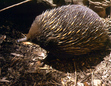
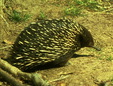
The subclass Prototheria contains the egg-laying mammals, which are the most ancestral forms in the class Mammalia. There are only three extant species grouped into two families and a single order, the Monotremata. Despite bearing fewer species than most mammalian genera, the prototherians are so unique among mammals that there is little question that they represent a distinct and ancient branch of the mammmalian family tree. However, it is not clear how monotremes are related to the two other major lineages of mammals, marsupials (Metatheria) and placentals (Eutheria). Some evidence supports the hypothesis that prototherians form a clade with the marsupials, while other evidence suggests that prototherians are sister to a clade containing both marsupials and placentals. (Heckner, 1990; Janke, et al., 1996; Janke, et al., 1997; Killian, et al., 2001; Nowak, 1991; Vaughan, et al., 2000)
Prototherians probably split from the lineage leading to other mammals sometime in the Mesozoic. They retain many characters of their therapsid ancestors (for example, a complex pectoral girdle, laying of eggs rather than bearing live young, limbs oriented with humerus and femur held lateral to body, and a cloaca). The skulls of monotremes are almost birdlike in appearance, with a long rostrum and smooth external appearance. Modern monotremes lack teeth as adults; sutures are hard to see; the rostrum is elongate, beak-like, and covered by a leathery sheath; and lacrimal bones are absent. Monotremes have several important mammalian characters, however, including fur (but they lack vibrissae), a four chambered heart, a single dentary bone, three middle ear bones, and the ability to lactate. (Heckner, 1990; Nowak, 1991; Vaughan, et al., 2000)
Geographic Range
Monotremes are restricted to Australia and New Guinea. Their fossil record is very poor; the earliest fossil attributed to this group is from the early Cretaceous. A fossil from Argentina suggests that the monotremes were more widely distributed early in their history. (Heckner, 1990; Nowak, 1991; Vaughan, et al., 2000)
- Biogeographic Regions
- australian
Habitat
Prototherians are either terrestrial (Tachyglossidae) or primarily aquatic (Ornithorhynchidae). Their terrestrial habitats include deserts, sandy plains, rocky areas, and forests in both lowlands and mountains. Platypuses inhabit lakes, ponds and streams; they shelter in burrows along the banks and spend much of their time foraging in the water. (Heckner, 1990; Nowak, 1991)
- Habitat Regions
- temperate
- tropical
- terrestrial
- freshwater
- Terrestrial Biomes
- desert or dune
- savanna or grassland
- forest
- scrub forest
- mountains
- Aquatic Biomes
- lakes and ponds
- rivers and streams
- Other Habitat Features
- riparian
Physical Description
Besides the absence of teeth, lacrimals, and obvious sutures, prototherians share a number of skeletal characteristics. On the skulls, the jugals are reduced or absent, the dentary is a slender bone with only a vestige of a coronoid process, the angle of the dentary is not inflected medially (unlike that of marsupials), auditory bullae are missing (part of the middle ear is enclosed by tympanic rings), and much of the wall of the braincase is made up by the petrosal rather than the alisphenoid (unlike all other modern mammals). Postcranially, the skeleton of prototherians is also unique among mammals. It is a fascinating mosaic of primitive characteristics inherited from therapsids but found in no other living mammals, and modifications probably related to the burrowing habits of modern prototherians. Their shoulder girdles are complex, including the standard components of modern mammals ( scapula and clavicle), but also additional elements including coracoid, epicoracoid, and interclavicle. The scapula, however, is simplified, lacking a supraspinous fossa. The shoulder girdle is much more rigidly attached to the axillary skeleton than in other mammals. Femur and humerus are held roughly parallel to the ground when the animal walks, more in the fashion of therapsids and most modern reptiles than like modern mammals. Ribs are found on the neck (cervical) vertebrae as well as the chest (thoracic) vertebrae; in all other modern mammals, they are restricted to the thoracic region. (Heckner, 1990; Nowak, 1991; Vaughan, et al., 2000)


Another interesting skeletal characteristic of prototherians is the large epipubic bones in the pelvic region. Epipubic bones were originally thought to be related to having a pouch, but they are found in both males and females. They also occur in all species of marsupials, whether a pouch is present or not (not all marsupials have a pouch). It is now thought that epipubic bones are a vestige of the skeleton of therapsids, providing members of that group with extra attachments for abdominal muscles to support the weight of the hindquarters. (Heckner, 1990; Nowak, 1991)
Prototherians are endothermic, but they have unusually low metabolic rates and maintain a body temperature that is lower than that of most other mammals. (Heckner, 1990; Nowak, 1991)
All male prototherians have spurs on their ankles that are presumed to be used in fighting and in defense. In one family (Ornithorhynchidae), a groove along the spur carries poison secreted by adjacent glands. (Heckner, 1990; Nowak, 1991)
- Other Physical Features
- endothermic
- homoiothermic
- bilateral symmetry
- venomous
Reproduction
Little is known about the mating systems of prototherians. They are solitary for most of the year, coming together only to mate. During the mating season, duck-billed platypuses are found in pairs, but despite these observations, platypuses are not likely to be monogamous because males do not associate with females post-copulation, nor do they provide any parental care. Female short-nosed spiny echidnas have been observed with several males at a time, which may reflect a polygyny or polyandry. Even less can be inferred about the mating systems of long-nosed spiny echidnas because so little is known about their basic behavior and biology. (Heckner, 1990; Nowak, 1991)
Prototherians are seasonal breeders. Typically, the breeding season lasts 1 to 3 months between July and October. At least one species (duck-billed platypuses) perform somewhat elaborate courtship behaviors prior to copulation. (Heckner, 1990; Nowak, 1991)
The eggs layed by monotremes are small (13 to 15 mm diameter) and covered by a leathery shell. The number of eggs laid is small, usually 1 to 3, and they are placed in the mother's pouch. They contain a large yolk, which is concentrated at one end of the egg, very much like the yolk of a bird's egg. Only the left ovary is functional in the platypus, but both produce eggs in the echidna. Like the eggs of birds, monotreme eggs are incubated and hatched outside the body of the mother. Incubation lasts about 12 days. The young, which are tiny and at a very early stage of development when they hatch, break out of the eggs using a "milk tooth. They are protected in a temporary pouch in echidnas but not platypuses. They are fed milk produced by mammary glands; the milk is secreted onto the skin within the pouch and sucked or lapped up by the babies. Weaning takes place when the young are 16 to 20 weeks old. (Heckner, 1990; Nowak, 1991; Vaughan, et al., 2000)
- Key Reproductive Features
- iteroparous
- seasonal breeding
- gonochoric/gonochoristic/dioecious (sexes separate)
- sexual
- oviparous
The parental investment of male prototherians appears to consist entirely of acquiring mates and fertilizing a female's eggs. All other investment and parental care is provided by females. Young are born in a highly altricial state and require considerable care and protection from their mothers. As mammals, females produce milk and nurse their young. Echidnas develop a brood pouch on their abdomen within which eggs and hatched young develop for nearly two months. Young are weaned by about three months of age. Platypuses do not have a brood pouch, and instead lay their eggs in deep, complex burrows on the banks of streams and ponds. Young develop within the burrow and are weaned after 3 months. (Heckner, 1990; Nowak, 1991)
- Parental Investment
- altricial
-
pre-fertilization
- provisioning
-
protecting
- female
-
pre-hatching/birth
-
provisioning
- female
-
protecting
- female
-
provisioning
-
pre-weaning/fledging
-
provisioning
- female
-
protecting
- female
-
provisioning
Lifespan/Longevity
Little is known regarding the natural lifespan of prototherians; however, they can live several decades in captivity. In at least one case, a short-nosed echidna lived 50 years. (Heckner, 1990; Nowak, 1991)
Behavior
Prototherians are primarily solitary animals and at least one species (Tachyglossus aculeatus) is territorial. Activity patterns vary among species, and even among populations of T. aculeatus; prototherians may be diurnal, crepuscular or nocturnal. Echidnas are fully terrestrial and eat mainly ants, termites, and worms whereas platypuses spend much of their time foraging in the water for a wider variety of invertebrates. All three species are exceptional diggers, using powerful limbs to dig shelters or to quickly escape from predators. In addition to digging their way out of trouble, echidnas can roll up and erect their spines as a defense mechanism. If insufficient food is available, prototherians may enter temporary torpor or more prolonged periods of hibernation when food is scarce in the winter. (Heckner, 1990; Nowak, 1991; Vaughan, et al., 2000)
- Key Behaviors
- terricolous
- fossorial
- natatorial
- diurnal
- nocturnal
- crepuscular
- motile
- hibernation
- solitary
- territorial
Communication and Perception
Hearing, olfaction, touch, and vision are all important to some degree in prototherians. Hearing and sight are well developed in platypuses and moderately well-developed in echidnas. The sense of touch is perhaps most important to a platypus that is searching at the bottom of a stream for food or an echida that is rooting through the earth for termites or worms. Platypus bills and echidna snouts are extremely sensitive organs that are essential to effective foraging. Platypuses may even use electrical stimuli to locate prey. Olfaction is well-developed in echidnas and may be used in individual recognition. Prototherians occasionally produce some simple vocalizations, but their function is unknown. (Heckner, 1990; Nowak, 1991)
Food Habits
All prototherians are carnivorous, with their diets consisting of various invertebrates. Platypuses forage in the benthos of lakes and streams, using their sensitive bills to find prey. They are generalist predators, whereas echidnas specialize on either ants and termites (Tachyglossus) or worms (Zaglossus). Both species of echidna are powerful diggers and use their claws and snouts to root through the earth to find food. (Heckner, 1990; Nowak, 1991)
- Primary Diet
-
carnivore
- insectivore
- eats non-insect arthropods
- molluscivore
Predation
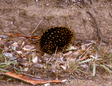
Little is known about the predators of prototherians or how predation impacts prototherian populations. With their robust spines, echidnas are certainly well-protected from threats. To deter potential predators, echidnas erect their spines, roll into protected balls, or rapidly dig a hole or enter a crevice, exposing only their spines. (Heckner, 1990; Nowak, 1991)
Ecosystem Roles
Prototherians may significantly impact populations of their prey; this may be more true for echidnas because they specialize on only a few prey types rather than eating a little bit of many different species. Because they are adept diggers, prototherians create and modify habitat for other organisms. Platypuses in particular can exavate extensive burrows on the banks of freshwater lakes and streams. Prototherians are hosts of various parasites (e.g. trypanosomes in platypuses and hepatozoans in echidnas). (Clark, et al., 2005; Noyes, et al., 1999)
- Ecosystem Impact
- creates habitat
- Haemogregarinidae
- Trypanosoma binneyi
Economic Importance for Humans: Positive
One of the three species within Prototheria (Zaglossus bruinji) is eaten by the indigenous people of New Guinea. Hunting pressure has been so great that this species is now threatened with extinction. (Nowak, 1991)
- Positive Impacts
- food
Economic Importance for Humans: Negative
Prototherians have no known negative impact on people, except perhaps for the pain a platypus can cause if it delivers venom with its spur. If unmolested, platypuses will not attack humans. (Nowak, 1991)
- Negative Impacts
-
injures humans
- bites or stings
Conservation Status
At least two of the three species of prototherians are threatened with extinction or were at some point in the recent past. Long-nosed echidnas are currently listed as endangered by the International Union for the Conservation of Nature (IUCN) redlist (www.redlist.org). Habitat destruction and heavy hunting pressure have severely limited populations of this species. In the past, platypuses were declining rapidly due to their overexploitation in the fur trade, but recent conservation efforts have helped populations rebound considerably. (Groombridge, 1994; Nowak, 1991)
-
- IUCN Red List [Link]
- Not Evaluated
Contributors
Tanya Dewey (editor), Animal Diversity Web.
Matthew Wund (author), University of Michigan-Ann Arbor, Anna Bess Sorin (author), Biology Dept., University of Memphis, Phil Myers (author), Museum of Zoology, University of Michigan-Ann Arbor.
Glossary
- Australian
-
Living in Australia, New Zealand, Tasmania, New Guinea and associated islands.

- acoustic
-
uses sound to communicate
- altricial
-
young are born in a relatively underdeveloped state; they are unable to feed or care for themselves or locomote independently for a period of time after birth/hatching. In birds, naked and helpless after hatching.
- bilateral symmetry
-
having body symmetry such that the animal can be divided in one plane into two mirror-image halves. Animals with bilateral symmetry have dorsal and ventral sides, as well as anterior and posterior ends. Synapomorphy of the Bilateria.
- carnivore
-
an animal that mainly eats meat
- chemical
-
uses smells or other chemicals to communicate
- crepuscular
-
active at dawn and dusk
- desert or dunes
-
in deserts low (less than 30 cm per year) and unpredictable rainfall results in landscapes dominated by plants and animals adapted to aridity. Vegetation is typically sparse, though spectacular blooms may occur following rain. Deserts can be cold or warm and daily temperates typically fluctuate. In dune areas vegetation is also sparse and conditions are dry. This is because sand does not hold water well so little is available to plants. In dunes near seas and oceans this is compounded by the influence of salt in the air and soil. Salt limits the ability of plants to take up water through their roots.
- diurnal
-
- active during the day, 2. lasting for one day.
- endothermic
-
animals that use metabolically generated heat to regulate body temperature independently of ambient temperature. Endothermy is a synapomorphy of the Mammalia, although it may have arisen in a (now extinct) synapsid ancestor; the fossil record does not distinguish these possibilities. Convergent in birds.
- food
-
A substance that provides both nutrients and energy to a living thing.
- forest
-
forest biomes are dominated by trees, otherwise forest biomes can vary widely in amount of precipitation and seasonality.
- fossorial
-
Referring to a burrowing life-style or behavior, specialized for digging or burrowing.
- freshwater
-
mainly lives in water that is not salty.
- hibernation
-
the state that some animals enter during winter in which normal physiological processes are significantly reduced, thus lowering the animal's energy requirements. The act or condition of passing winter in a torpid or resting state, typically involving the abandonment of homoiothermy in mammals.
- insectivore
-
An animal that eats mainly insects or spiders.
- iteroparous
-
offspring are produced in more than one group (litters, clutches, etc.) and across multiple seasons (or other periods hospitable to reproduction). Iteroparous animals must, by definition, survive over multiple seasons (or periodic condition changes).
- molluscivore
-
eats mollusks, members of Phylum Mollusca
- motile
-
having the capacity to move from one place to another.
- mountains
-
This terrestrial biome includes summits of high mountains, either without vegetation or covered by low, tundra-like vegetation.
- natatorial
-
specialized for swimming
- native range
-
the area in which the animal is naturally found, the region in which it is endemic.
- nocturnal
-
active during the night
- oviparous
-
reproduction in which eggs are released by the female; development of offspring occurs outside the mother's body.
- riparian
-
Referring to something living or located adjacent to a waterbody (usually, but not always, a river or stream).
- scrub forest
-
scrub forests develop in areas that experience dry seasons.
- seasonal breeding
-
breeding is confined to a particular season
- sexual
-
reproduction that includes combining the genetic contribution of two individuals, a male and a female
- solitary
-
lives alone
- tactile
-
uses touch to communicate
- temperate
-
that region of the Earth between 23.5 degrees North and 60 degrees North (between the Tropic of Cancer and the Arctic Circle) and between 23.5 degrees South and 60 degrees South (between the Tropic of Capricorn and the Antarctic Circle).
- terrestrial
-
Living on the ground.
- territorial
-
defends an area within the home range, occupied by a single animals or group of animals of the same species and held through overt defense, display, or advertisement
- tropical
-
the region of the earth that surrounds the equator, from 23.5 degrees north to 23.5 degrees south.
- tropical savanna and grassland
-
A terrestrial biome. Savannas are grasslands with scattered individual trees that do not form a closed canopy. Extensive savannas are found in parts of subtropical and tropical Africa and South America, and in Australia.
- savanna
-
A grassland with scattered trees or scattered clumps of trees, a type of community intermediate between grassland and forest. See also Tropical savanna and grassland biome.
- temperate grassland
-
A terrestrial biome found in temperate latitudes (>23.5° N or S latitude). Vegetation is made up mostly of grasses, the height and species diversity of which depend largely on the amount of moisture available. Fire and grazing are important in the long-term maintenance of grasslands.
- venomous
-
an animal which has an organ capable of injecting a poisonous substance into a wound (for example, scorpions, jellyfish, and rattlesnakes).
- visual
-
uses sight to communicate
References
Clark, P., P. Holz, D. Spratt. 2005. Hepatozoon tachyglossi sp nov (Haemogregarinidae), a protozoan parasite from the blood of a short-beaked echidna, Tachyglossus aculeatus. Transactions of the Royal Society of South Australia, 129: 49-52.
Groombridge, B. 1994. 1994 IUCN Red List of Threatened Animals. Gland, Switzerland: IUCN. Accessed September 02, 2005 at www.redlist.org.
Heckner, U. 1990. Egg-laying mammals (Monotremes). Pp. 192-207 in B Grzimek, ed. Grzimek's Encyclopedia of Mammals, Vol. 1, 1st Edition. New York: Mcgraw-Hill.
Janke, A., N. Gemmell, G. Feldmaier-Fuchs, A. von Haeseler, S. Paabo. 1996. The mitochondrial genome of a monotreme - The platypus (Ornithorhynchus anatinus). Journal of Molecular Evolution, 42: 153-159.
Janke, A., X. Xu, U. Arnason. 1997. The complete mitochondrial genome of the wallaroo (Macropus robustus) and the phylogenetic relationship among Monotremata, Marsupialia, and Eutheria. Proceedings of the National Academy of Sciences of the United States of America, 94: 1276-1281.
Killian, J., T. Buckley, N. Stewart, B. Munday, R. Jirtle. 2001. Marsupials and Eutherians reunited: genetic evidence for the Theria hypothesis of mammalian evolution. Mammalian Genome, 12: 513-517.
Nowak, R. 1991. Order Monotremata. Pp. 1-9 in Walker's Mammals of the World, Vol. 1, 5th Edition. Baltimore: Johns Hopkins University Press.
Noyes, H., J. Stevens, M. Teixeira, J. Phelan, P. Holz. 1999. A nested PCR for the ssrRNA gene detects Trypanosoma binneyi in the platypus and Trypanosoma sp. in wombats and kangaroos in Australia. International Journal for Parasitology, 29: 331-339.
Vaughan, T., J. Ryan, N. Czaplewski. 2000. Mammalogy, 4th Edition. Toronto: Brooks Cole.