Galliformeschicken-like birds(Also: megapodes, curassows, pheasants, quails, and relatives)


Diversity
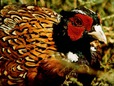
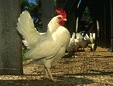
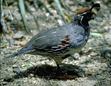
Galliformes is a large and diverse group comprising about 70 genera and more than 250 species. Taxa within Galliformes are commonly referred to as 'gallinaceous birds' (meaning chicken-like) or game birds (as many species are hunted). There is much ongoing discussion about the number of recognized families within Galliformes. Howard and Moore’s Complete Checklist of the Birds of the World (2003) lists: Megapodiidae (scrub fowl, brush-turkeys, mallee fowl), Cracidae (guans, chachalacas, curassows), Numididae (Guineafowl), Odontophoridae (New World quails) and Phasianidae (grouse, turkeys, pheasants and partridges). Gallinaceous birds are chicken-like in appearance, with small to large bodies and blunt-wings. Plumage coloration ranges from cryptic to dark to brightly colorful. Some gallinaceous birds have elaborate head and neck ornamentation including wattles and casques. Some are primarily arboreal and others are terrestrial. Social groups may range from solitary dwellers to mated pairs to gregarious flocks. Mating systems range from monogamy to polygyny to polygynandry. Megapodes, also known as mound builders, bury their eggs, which are incubated by heat from decaying vegetation, sun-warmed sand, or geothermal sources. Cracids may play an important role in the forest ecosystem as seed predators and dispersers. Some phasianoid galliforms have been domesticated and are kept as ornamentals or are bred and raised for human consumption. (Campbell and Lack, 1985; Dickinson, 2003; Dyke, et al., 2003; Johnsgard, 1999; Madge and McGowan, 2002; Sibley and Ahlquist, 1990)
Geographic Range
As a group, Galliformes has a nearly worldwide distribution. (Campbell and Lack, 1985; Johnsgard, 1999; Payne, 2000)
- Biogeographic Regions
- nearctic
- oriental
- ethiopian
- neotropical
- australian
Habitat
Galliform taxa inhabit a diversity of habits including primary forests, deserts, scrub forests, cultivated lands, bamboo thickets and alpine meadows. (Delacour and Amadon, 1973; Johnsgard, 1983; Johnsgard, 1999; Jones, et al., 1995; Madge and McGowan, 2002; Stiles and Skutch, 1991)
- Habitat Regions
- temperate
- tropical
- terrestrial
- Terrestrial Biomes
- tundra
- taiga
- desert or dune
- forest
- rainforest
- scrub forest
- mountains
- Other Habitat Features
- urban
- suburban
- agricultural
Physical Description
Gallinaceous birds are chicken-like in appearance, with small to large bodies and blunt-wings. Plumage coloration ranges from cryptic to dark to brightly colorful. Some gallinaceous birds have elaborate head and neck ornamentation including feathers, wattles and casques. Gallinaceous birds range broadly in weight from roughly 275 g to 9.5 kg. Tail length is variable by species, from appearing almost tailless to long (1 m) with colorful and elaborate patterns. The legs are usually strong and one or more spurs may be present on the tarsus. Some species are sexually monomorphic in size and plumage coloration, while others are sexually dimorphic. (Campbell and Lack, 1985; Delacour and Amadon, 1973; Johnsgard, 1999; Jones, et al., 1995; Madge and McGowan, 2002; Stiles and Skutch, 1991)
- Other Physical Features
- endothermic
- bilateral symmetry
- Sexual Dimorphism
- male larger
- sexes colored or patterned differently
- male more colorful
- sexes shaped differently
- ornamentation
Reproduction
Gallinaceous birds exhibit a diversity of mating systems including monogamy, polygyny and polygynandry. Pair bonds, if evident, may last only through copulation or may persist over multiple breeding seasons. Courtship behaviors may entail elaborate displays of brightly colored skin and plumage. In some species dominance hierarchies exist, and high-ranking males often have greater mating success than lower ranking males. (Campbell and Lack, 1985; Delacour and Amadon, 1973; Dickson, 1992; Johnsgard, 1983; Johnsgard, 1999; Jones, et al., 1995; Madge and McGowan, 2002; Stiles and Skutch, 1991)
- Mating System
- monogamous
- polygynous
- polygynandrous (promiscuous)
Galliform taxa may be sedentary or migratory. Most species breed seasonally in relation to local climactic conditions. Gallinaceous birds may nest on the ground or in trees. In some species nests are shallow, and lined with grass or leaves. Megapodes construct incubation mounds in which eggs are incubated environmentally, through the heat generated by decomposing vegetation, sun-warmed sand or geothermal sources. Courtship in some species entails elaborate visual displays in which males may strut about displaying brightly colored plumage or wattles. Females may lay from 2 to 35 eggs over the course of the breeding season. Egg dumping may occur in some species. Egg coloration varies, from white or creamy to brown or spotted. Chicks are precocial, able to walk, forage and fly shortly after hatching. (Campbell and Lack, 1985; Delacour and Amadon, 1973; Johnsgard, 1983; Johnsgard, 1999; Jones, et al., 1995; Madge and McGowan, 2002; Stiles and Skutch, 1991)
- Key Reproductive Features
- iteroparous
- seasonal breeding
- gonochoric/gonochoristic/dioecious (sexes separate)
- sexual
- fertilization
- oviparous
In gallinaceous birds parental care may include female incubation or environmental incubation (incubation mounds of megapodes). Brooding may be absent, or conducted primarily by the female. Males may guard nest sites, brooding females, or chicks.
In some gallinaceous birds, parents do not feed their young while in others the female provisions chicks with food offered from her bill. Family groups may join flocks at the end of the breeding season. (Campbell and Lack, 1985; Delacour and Amadon, 1973; Johnsgard, 1983; Johnsgard, 1999; Jones, et al., 1995; Madge and McGowan, 2002; Stiles and Skutch, 1991)
- Parental Investment
- precocial
- male parental care
- female parental care
Lifespan/Longevity
Some gallinaceous birds may live for five to eight years (grouse) in the wild and others may survive up to 30 years in captivity (great argus (Argusianus argus)). (Campbell and Lack, 1985; Delacour and Amadon, 1973; Johnsgard, 1983)
Behavior
Gallinaceous birds may be either arboreal or terrestrial. Although some fly long distances, most move about mainly by walking and fly relatively infrequently. Many species roost in trees and are most active at dawn and dusk. Gallinaceous birds may be seen dust-bathing in open areas, usually in close proximity to scrub or other ready cover. Arboreal species forage mainly in trees, but may infrequently forage on the ground.
When startled or alarmed some gallinaceous birds fly straight up into the air, then fly horizontally away from the source of the disturbance. Some species are solitary while others spend some part of the year in mated pairs or in flocks. Dominance hierarchies are evident in some species that live in social groups. (Campbell and Lack, 1985; Delacour and Amadon, 1973; Johnsgard, 1983; Johnsgard, 1999; Jones, et al., 1995; Madge and McGowan, 2002; Stiles and Skutch, 1991)
- Key Behaviors
- flies
- saltatorial
- diurnal
- crepuscular
- motile
- migratory
- sedentary
- solitary
- territorial
- social
- colonial
- dominance hierarchies
Communication and Perception
Gallinaceous birds appear to communicate through behavioral posturing, morphological features, vocalizations and other auditory signals. Identifiable threat posturing entails an upright body positioning, whereas submission involves a lowering of the body to the substrate. Gallinaceous birds may have brightly colored skin on the head and neck, wattles or casques, or brightly colored plumage. These features may be elaborately displayed during courtship and intra-sexual competition. The types of vocalizations used by gallinaceous birds are numerous and play an important role in communication. For example, characteristic vocalizations have been observed in conjunction with: courtship, agonistic interactions, submissive posturing, territoriality, and brooding. Other acoustic signaling takes place through the rattling or vibration of feathers of the wing or tail. Some species produce drumming or whirring sounds while in flight. (Campbell and Lack, 1985; Delacour and Amadon, 1973; Johnsgard, 1983; Johnsgard, 1999; Jones, et al., 1995; Stiles and Skutch, 1991)
- Other Communication Modes
- choruses
- vibrations
- Perception Channels
- visual
- tactile
- acoustic
- vibrations
- chemical
Food Habits
Gallinaceous birds eat a variety of plant and animal material. Plant material includes: fruits, seeds, leaves, shoots, flowers, tubers and roots. Animal material includes: arthropods, snails, worms, lizards, snakes, small rodents, avian nestlings and eggs. (Campbell and Lack, 1985; Delacour and Amadon, 1973; Johnsgard, 1983; Johnsgard, 1999; Jones, et al., 1995; Santamaria and Franco, 2000; Stiles and Skutch, 1991)
Predation
Predators of gallinaceous birds include: snakes (suborder Serpentes), foxes (family Canidae), feral cats (Felis silvestris), feral dogs (Canis lupus familiaris), raptors (order Falconiformes), rodents (order Rodentia), raccoons (Procyon lotor), civet cats (family Viverridae) and corvids (family Corvidae). (Delacour and Amadon, 1973; Dickson, 1992; Johnsgard, 1999; Jones, et al., 1995)
-
- Known Predators
-
- snakes (Serpentes)
- foxes (Canidae)
- feral cats (Felis silvestris)
- feral dogs (Canis lupus familiaris)
- raptors (Falconiformes)
- rodents (Rodentia)
- raccoons (Procyon lotor)
- civet cats (Viverridae)
- corvids (Corvidae)
Ecosystem Roles
Gallinaceous birds may play important ecosystem roles as seed dispersers and seed predators. Cracids may be biological indicators of habitat quality. (IUCN, 2003; Santamaria and Franco, 2000)
- Ecosystem Impact
- disperses seeds
- creates habitat
- biodegradation
Economic Importance for Humans: Positive
Many gallinaceous birds are economically important to humans. Some species have been domesticated and are reared for human consumption of meat and eggs. Most notable in this regard, common fowl ('chickens') derive from domestication of Gallus gallus (red jungle fowl). Grouse, quail, partridges, pheasants and turkeys are important game birds that are hunted regularly in all parts of the world. Many gallinaceous species are hunted primarily for food, although feathers of some species have been collected for ornamentation and clothing manufacture. Some species are becoming important to the ecotourism industry. (Campbell and Lack, 1985; Delacour and Amadon, 1973; Dickson, 1992; IUCN, 2003; Johnsgard, 1999; Jones, et al., 1995; Santamaria and Franco, 2000)
- Positive Impacts
- food
- body parts are source of valuable material
- ecotourism
Economic Importance for Humans: Negative
Some gallinaceous birds, while foraging for seeds and shoots on cultivated lands, may damage agricultural crops. (Campbell and Lack, 1985; Jones, et al., 1995)
- Negative Impacts
- crop pest
- household pest
Conservation Status
The IUCN Red List of Threatened Species includes 107 species of gallinaceous birds. Two species are listed as extinct (double-banded argus (Argusianus bipunctatus), New Zealand quail (Coturnix novaezelandiae)). Alagoas curassow (Mita mita) is listed as extinct in the wild. Habitat loss and hunting are identified as major threats for this group. (2003 IUCN, 2003; Collar, et al., 1994)
-
- IUCN Red List [Link]
- Not Evaluated
Contributors
Laura Howard (author), Animal Diversity Web, Alaine Camfield (editor), Animal Diversity Web.
Glossary
- Australian
-
Living in Australia, New Zealand, Tasmania, New Guinea and associated islands.

- Ethiopian
-
living in sub-Saharan Africa (south of 30 degrees north) and Madagascar.
- Nearctic
-
living in the Nearctic biogeographic province, the northern part of the New World. This includes Greenland, the Canadian Arctic islands, and all of the North American as far south as the highlands of central Mexico.
- Neotropical
-
living in the southern part of the New World. In other words, Central and South America.
- acoustic
-
uses sound to communicate
- agricultural
-
living in landscapes dominated by human agriculture.
- bilateral symmetry
-
having body symmetry such that the animal can be divided in one plane into two mirror-image halves. Animals with bilateral symmetry have dorsal and ventral sides, as well as anterior and posterior ends. Synapomorphy of the Bilateria.
- biodegradation
-
helps break down and decompose dead plants and/or animals
- carnivore
-
an animal that mainly eats meat
- chemical
-
uses smells or other chemicals to communicate
- choruses
-
to jointly display, usually with sounds, at the same time as two or more other individuals of the same or different species
- colonial
-
used loosely to describe any group of organisms living together or in close proximity to each other - for example nesting shorebirds that live in large colonies. More specifically refers to a group of organisms in which members act as specialized subunits (a continuous, modular society) - as in clonal organisms.
- crepuscular
-
active at dawn and dusk
- desert or dunes
-
in deserts low (less than 30 cm per year) and unpredictable rainfall results in landscapes dominated by plants and animals adapted to aridity. Vegetation is typically sparse, though spectacular blooms may occur following rain. Deserts can be cold or warm and daily temperates typically fluctuate. In dune areas vegetation is also sparse and conditions are dry. This is because sand does not hold water well so little is available to plants. In dunes near seas and oceans this is compounded by the influence of salt in the air and soil. Salt limits the ability of plants to take up water through their roots.
- diurnal
-
- active during the day, 2. lasting for one day.
- dominance hierarchies
-
ranking system or pecking order among members of a long-term social group, where dominance status affects access to resources or mates
- ecotourism
-
humans benefit economically by promoting tourism that focuses on the appreciation of natural areas or animals. Ecotourism implies that there are existing programs that profit from the appreciation of natural areas or animals.
- endothermic
-
animals that use metabolically generated heat to regulate body temperature independently of ambient temperature. Endothermy is a synapomorphy of the Mammalia, although it may have arisen in a (now extinct) synapsid ancestor; the fossil record does not distinguish these possibilities. Convergent in birds.
- female parental care
-
parental care is carried out by females
- fertilization
-
union of egg and spermatozoan
- folivore
-
an animal that mainly eats leaves.
- food
-
A substance that provides both nutrients and energy to a living thing.
- forest
-
forest biomes are dominated by trees, otherwise forest biomes can vary widely in amount of precipitation and seasonality.
- frugivore
-
an animal that mainly eats fruit
- granivore
-
an animal that mainly eats seeds
- herbivore
-
An animal that eats mainly plants or parts of plants.
- insectivore
-
An animal that eats mainly insects or spiders.
- internal fertilization
-
fertilization takes place within the female's body
- iteroparous
-
offspring are produced in more than one group (litters, clutches, etc.) and across multiple seasons (or other periods hospitable to reproduction). Iteroparous animals must, by definition, survive over multiple seasons (or periodic condition changes).
- male parental care
-
parental care is carried out by males
- migratory
-
makes seasonal movements between breeding and wintering grounds
- monogamous
-
Having one mate at a time.
- motile
-
having the capacity to move from one place to another.
- mountains
-
This terrestrial biome includes summits of high mountains, either without vegetation or covered by low, tundra-like vegetation.
- native range
-
the area in which the animal is naturally found, the region in which it is endemic.
- omnivore
-
an animal that mainly eats all kinds of things, including plants and animals
- oriental
-
found in the oriental region of the world. In other words, India and southeast Asia.
- oviparous
-
reproduction in which eggs are released by the female; development of offspring occurs outside the mother's body.
- polygynandrous
-
the kind of polygamy in which a female pairs with several males, each of which also pairs with several different females.
- polygynous
-
having more than one female as a mate at one time
- rainforest
-
rainforests, both temperate and tropical, are dominated by trees often forming a closed canopy with little light reaching the ground. Epiphytes and climbing plants are also abundant. Precipitation is typically not limiting, but may be somewhat seasonal.
- saltatorial
-
specialized for leaping or bounding locomotion; jumps or hops.
- scrub forest
-
scrub forests develop in areas that experience dry seasons.
- seasonal breeding
-
breeding is confined to a particular season
- sedentary
-
remains in the same area
- sexual
-
reproduction that includes combining the genetic contribution of two individuals, a male and a female
- sexual ornamentation
-
one of the sexes (usually males) has special physical structures used in courting the other sex or fighting the same sex. For example: antlers, elongated tails, special spurs.
- social
-
associates with others of its species; forms social groups.
- solitary
-
lives alone
- suburban
-
living in residential areas on the outskirts of large cities or towns.
- tactile
-
uses touch to communicate
- taiga
-
Coniferous or boreal forest, located in a band across northern North America, Europe, and Asia. This terrestrial biome also occurs at high elevations. Long, cold winters and short, wet summers. Few species of trees are present; these are primarily conifers that grow in dense stands with little undergrowth. Some deciduous trees also may be present.
- temperate
-
that region of the Earth between 23.5 degrees North and 60 degrees North (between the Tropic of Cancer and the Arctic Circle) and between 23.5 degrees South and 60 degrees South (between the Tropic of Capricorn and the Antarctic Circle).
- terrestrial
-
Living on the ground.
- territorial
-
defends an area within the home range, occupied by a single animals or group of animals of the same species and held through overt defense, display, or advertisement
- tropical
-
the region of the earth that surrounds the equator, from 23.5 degrees north to 23.5 degrees south.
- tundra
-
A terrestrial biome with low, shrubby or mat-like vegetation found at extremely high latitudes or elevations, near the limit of plant growth. Soils usually subject to permafrost. Plant diversity is typically low and the growing season is short.
- urban
-
living in cities and large towns, landscapes dominated by human structures and activity.
- vibrations
-
movements of a hard surface that are produced by animals as signals to others
- visual
-
uses sight to communicate
- young precocial
-
young are relatively well-developed when born
References
2003 IUCN, 2003. "2003 IUCN Red List of Threatened Species" (On-line). Accessed March 09, 2004 at http://www.redlist.org.
Campbell, B., E. Lack. 1985. A Dictionary of Birds. Vermillion: Buteo Books.
Collar, N., M. Crosby, A. Stattersfield. 1994. Birds to Watch 2, The World List of Threatened Birds. D.C.: Smithsonian Institution Press.
Delacour, J., D. Amadon. 1973. Curassows and Related Birds. New York: American Museum of Natural History.
Dickinson, E. 2003. The Howard and Moore Complete Checklist of the Birds of the World. London: Christopher Helm.
Dickson, J. 1992. The Wild Turkey: biology and management. Harrisburg: Stackpole Books.
Dyke, G., B. Gulas, T. Crowe. 2003. Suprageneric relationships of galliform birds (Aves, Galliformes): a cladistic analysis of morphological characters. Zoological Journal of the Linnean Society, 137: 227-244.
Haaramo, M. 2003. "Mikko's Phylogeny Archives, Field Museum of Natural History, Helsinki, Finland." (On-line). Accessed March 16, 2004 at http://www.fmnh.helsinki.fi/users/haaramo/Metazoa/Deuterostoma/Chordata/Archosauria/Aves/Galliformes/Galliformes.htm.
IUCN, 2003. "IUCN Executive Summary of Curassows, Guans and Chachalacas: Status survey and conservation action plan" (On-line). Accessed March 09, 2004 at http://www.iucn.org/themes/ssc/pubs/cracids.htm.
Johnsgard, P. 1983. The Grouse of the World. Lincoln: University of Nebraska Press.
Johnsgard, P. 1999. The Pheasants of the World Biology and Natural History. Washington, D.C.: Smithsonian Institution Press.
Jones, D., R. Dekker, C. Roselaar. 1995. The Megapodes. New York: Oxford University Press Inc.
Ligon, J. 1999. The evolution of Avian Breeding Systems. New York: Oxford University Press.
Livezey, B., R. Zusi. 2001. Higher-order phylogenetics of modern Aves based on comparative anatomy. Netherlands Journal of Zoology, 51(2): 179-205.
Madge, S., P. McGowan. 2002. Pheasants, Partridges and Grouse: A guide to the pheasants, partridges, quails, grouse, guineafowl, buttonquails and sandgrouse of the world. London: Christopher Helm.
Monroe, B., C. Sibley. 1993. A World Checklist of Birds. Ann Arbor: Edwards Brothers Inc.
Payne, R. 2000. "Birds of the World, Biology 532, Recent Families, Birds of the World" (On-line). Accessed March 16, 2004 at http://www.ummz.lsa.umich.edu/birds/birddivresources/families.html.
Santamaria, M., A. Franco. 2000. Frugivory of Salvin's curassow in a rainforest of the Columbian Amazon. Wilson Bulletin, 112(4): 473-481.
Sibley, C., J. Ahlquist. 1990. Phylogeny and Classification of Birds, A Study in Molecular Evolution. New Haven: Yale University Press.
Sorenson, M., E. Oneal, J. Garcia-Moreno, D. Mindell. 2003. More taxa, more characters: the Hoatzin problem is still unresolved. Molecular Biology and Evolution, 20(9): 1484-1499.
Stiles, G., A. Skutch. 1991. A Guide to the Birds of Costa Rica. Ithaca: Cornell University Press.