Cervus nipponsika deer



Geographic Range
The original native range of Cervus nippon was described as "the southern Ussuri district of eastern Siberia; China, Formosa, Japan, Korea, Manchuria, Taiwan, and parts of Vietnam" (Feldhamer 1980, Flerov 1952, and Nowak 1991). In addition, numerous introductions have resulted in established populations in Australia, Austria, Denmark, England, France, Ireland, Jolo Island (south of the Philippines), New Zealand, Poland, Scotland, Maryland, Morocco, Oklahoma, Texas, Wisconsin, and Virginia (Feldhamer 1980, http://www.assateague.com/sika.html 1997, Nowak 1991, and Whitehead 1972).
- Biogeographic Regions
- nearctic
- palearctic
- oriental
- ethiopian
- australian
Habitat
Cervus nippon is primarily a forest-dwelling deer that particularly prefers forested areas with a dense understory (Nowak 1991). However, these animals are able to adapt quite well to a variety of other habitats such as freshwater marshes (Maryland) and grasslands (New Zealand) (Nowak 1991). In addition to their environmental adaptability, sika deer are found at a variety of elevations from sea level to 1800 m, and populations participate in seasonal altitudinal migrations of up to 700 m depending on such factors as snowfall and its subsequent melt, reproductive periods, and plant defoliation (Feldhamer 1980). The summer ranges of these animals are generally higher and larger than their winter ranges (Nowak 1991).
- Habitat Regions
- temperate
- terrestrial
- Terrestrial Biomes
- savanna or grassland
- forest
- scrub forest
- mountains
- Wetlands
- marsh
-
- Range elevation
- 0 to 1800 m
- 0.00 to 5905.51 ft
Physical Description
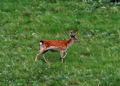
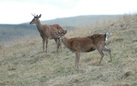
Cervus nippon is a small to medium-sized deer with a head and body length of approximately 950-1,800 mm, a tail length of about 75-130 mm, and a height (measured at the shoulder) of 640-1090 mm (Feldhamer 1980, Nowak 1991). On average, males grow until they are 7-10 years old, while females stop growing at age 4-6 years (Nowak 1991). This results in the sexual dimorphism of males averaging 8.7% larger than females (Feldhamer 1980 and Nowak 1991). The pelage of C. nippon ranges from chestnut-brown to reddish-olive and exhibits a great deal of variation resulting in colors such as yellow-brown, gray-brown, tan, black, or gray depending on the subspecies (Feldhamer 1980, Flerov 1952, Nowak 1991, Putman 1988, and Whitehead 1972). In addition, the coats of these animals are mottled with white spots arranged in seven or eight rows on the upper sides of the back (Feldhamer 1980, http://www.assateague.com/sika.html 1997, Nowak 1991). Moreover, the mid-dorsal area of C. nippon is darker than the rest of its coat, and this forms a line from head to rear, terminating at a large, white, erectile rump patch often used as a distinguishing characteristic of these animals (Feldhamer 1980, http://www.assateague.com/sika.html 1997, Nowak 1991). The metatarsals of these deer are surrounded by tufts of grayish-tan hairs, and the hooves of adult males average 60 mm in length and 40 mm in width (those of females are slightly smaller) (Feldhamer 1980). The winter coat of sika deer is very dense with 50-70 mm long hairs, while its summer pelage is composed of much finer, straighter, and shorter (30 mm) hairs (Feldhamer 1980 and Putman 1988). The chin, throat, and belly of sika deer have an off-white or gray hue (Feldhamer 1980 and Nowak 1991). Finally, both sexes have a shaggy neck mane that darkens in the winter (Feldhamer 1980 and Nowak 1991).
Two molts occur annually in sika deer (Feldhamer 1980). In northern temperate climates the molt into winter pelage takes place over a 2-4 week period beginning in September, while the summer molt requires approximately 3 months and begins in March (Feldhamer 1980). Interestingly and for unknown reasons, it is the older deer that molt first (Feldhamer 1980).
Antlers are only found among the males of this species (Nowak 1991). In the Northern Hemisphere, males are in velvet antlers from May until August, but hard antlers predominate by early September, just in time for intrasexual selection activities like fraying (Feldhamer 1980). The growth phase of antlers is about 130 days beginning immediately in May when they are generally shed (Feldhamer 1980 and Flerov 1952). It should be noted that older males shed their antlers before their younger counterparts (Feldhamer 1980 and Flerov 1952). The antlers of sika deer are narrow, erect, and directed slightly posteriorly (Brown 1983, Feldhamer 1980, and Nowak 1991). Each is fairly short - measuring about 300-660 mm in length depending on the subspecies and local conditions - and has 2-5 tines (prongs) (Brown 1983, Feldhamer 1980, Nowak 1991, and Putman 1988). A 25 mm diameter at the base of each antler is common, while a spread of 400-500 mm is the maximum observed length (Feldhamer 1980). An upswept brow tine arises approximately 25 mm above the coronet (burr), while a bay tine is absent (Brown 1983 and Feldhamer 1980). Also, a forked, or sometimes palmated, tine surmounts the tray tine and faces forward (Brown 1983 and Feldhamer 1980). Finally, experimentation with antler growth and development have revealed that these processes can be entrained in deer previously sensitized to decreasing day lengths by increasing day lengths (Brown 1983 and Feldhamer 1980).
The skull of C. nippon is relatively short, with a rounded frontal-parietal region (Feldhamer 1980). The nasal bone does not extend beyond the maxilla, the lacrimal vacuity is fairly shallow, and the paroccipital processes extend below the occipital condyle (Feldhamer 1980). Overall, the cranial measurements of adult males averaged 8.9% larger than those of females (Feldhamer 1980). The dental formula of this species is 0/3, 1/1, 3/3, and 3/3 (Feldhamer 1980). The upper canines of sika deer protrude from the maxilla anteriorly, while the lower canines are incisiform (Feldhamer 1980). The molariform teeth are hypsodont and selenodont (Feldhamer 1980).
- Other Physical Features
- endothermic
- homoiothermic
- bilateral symmetry
- Sexual Dimorphism
- male larger
- ornamentation
-
- Range mass
- 4.5 to 80 kg
- 9.91 to 176.21 lb
-
- Range length
- 950 to 1800 mm
- 37.40 to 70.87 in
Reproduction
Cervus nippon is polygamous, and a successful male will gather as many as 12 females on his territory over the course of the mating (rutting) season (Feldhamer 1980, Nowak 1991). In addition, during the rutting season males quickly deplete their fat stores and may lose up to 20-30% of their body weight (Feldhamer 1980, Flerov 1952). Females, however, do not lose weight during the 6 week rutting season and may associate with a number of bucks in order to gain access to a number of feeding locations (Feldhamer 1980).
- Mating System
- polygynous
Both sexes reach reproductive maturity at 16-18 months (Nowak 1991). Sika deer breed in the fall (September and October), and births of single offspring occur in May and June after a gestation period of approximately 30 weeks ( http://www.assateague.com/sika.html 1997 and Nowak 1991). The newborn young weighs about 4.5-7.0 kg and is nursed from 1 of its mother's 4 mammae for up to 10 months on an increasingly fatty milk (contains approximately 13% fat at the inception of the lactation period and 30% fat at its conclusion) (Feldhamer 1980 and Nowak 1991). The birth of calves usually takes place in forested areas or open fields, but small outlying patches of cover may be used in some cases (Feldhamer 1980).
Some researchers have proposed that interbreeding between Japanese sika deer and red deer has occurred, yielding hybrid animals with an adaptive advantage over their purebred relatives (Putman 1988).
- Key Reproductive Features
- iteroparous
- seasonal breeding
- gonochoric/gonochoristic/dioecious (sexes separate)
- sexual
- fertilization
- viviparous
-
- Breeding interval
- Breeding occurs once yearly.
-
- Breeding season
- Breeding occurs in the fall, from September through October.
-
- Average number of offspring
- 1
-
- Average number of offspring
- 1
- AnAge
-
- Average gestation period
- 7 months
-
- Average gestation period
- 210 days
- AnAge
-
- Range time to independence
- 10 to 12 months
-
- Range age at sexual or reproductive maturity (female)
- 16 to 18 months
-
- Range age at sexual or reproductive maturity (male)
- 16 to 18 months
Female sika deer care for their young for up to a year after birth.
- Parental Investment
- altricial
- female parental care
Lifespan/Longevity
Captive individuals generally live 15 to 18 years, though one was recorded living 25 years and 5 months.
-
- Range lifespan
Status: captivity - 25 (high) years
- Range lifespan
-
- Average lifespan
Status: captivity - 15 to 18 years
- Average lifespan
-
- Average lifespan
Status: captivity - 26.3 years
- AnAge
- Average lifespan
Behavior
Cervus nippon is primarily nocturnal (Nowak 1991). In addition, sika deer are not particularly gregarious (Nowak 1991). Adult males are solitary for most of the year but sometimes band together, while females and their young form groups of 2-3 only during the calving season (Nowak 1991). Males mark the boundaries of their territories by digging holes up to 1.6 m wide and 0.3 m deep with their antlers and forefeet and urinating in them frequently (Feldhamer 1980 and Nowak 1991). In addition, thrashing of the ground cover with their antlers serves to define an individual's territory as well (Feldhamer 1980 and Nowak 1991). When territorial disputes occur between males, antlers and hooves are used as the primary weapons (Feldhamer 1980 and Nowak 1991).
When running at slow to medium speed, C. nippon uses a stiff gallop, making bounds of up to 3 m in length (Feldhamer 1980). At slightly increased speeds they exhibit a stiff-legged, quadrupedal hopping with all 4 hooves about 0.3 m off the ground simultaneously (Feldhamer 1980). With this gait bounds of 6 m in length have been reported, and these deer were able to clear obstacles up to 1.7 m in height (Feldhamer 1980).
Cervus nippon is also an excellent swimmer and readily enters the water to escape predators or for other purposes (Feldhamer 1980). Surprisingly, these deer are capable of swimming up to 12 km in the sea (Feldhamer 1980).
- Key Behaviors
- cursorial
- terricolous
- nocturnal
- motile
- sedentary
- territorial
- social
Home Range
During the summer adult males begin to establish territories that average 4.76 hectares (henceforth abbreviated "ha") but can range from 2 - 12 ha (Nowak 1991). It should be noted, however, that nonterritorial males - 4/5 of the male population - have an average home range of 11.74 ha (Nowak 1991).
Communication and Perception
Cervus nippon is a highly vocal species, and as of 1991, 10 different sounds have been recorded (Nowak 1991). These noises range from soft whistles used by does to communicate with each other, to "goat-like bleats" from does to fawn, to "soft, horse-like neighs" from fawn to does, to "loud, blood-curdling" screams produced by males, to an alarm call described as either a "sharp scream, a high-pitched whistle followed by a gutteral bark, or a chirp-like sound" (Feldhamer 1980, Nowak 1991, and Whitehead 1972).
Sika deer also usual postures and touch in communication. They use chemical cues to convey information on reproductive status and territorial boundaries (see Behavior, above).
- Other Communication Modes
- scent marks
Food Habits
A sika deer's diet can include any of the following: marsh grasses, fallen leaves, trees, brushy vegetation, herbs, fungi, bamboo, ground ferns, poison ivy, soy beans, and corn depending on environmental conditions (Feldhamer 1980). In other words, these animals are highly adaptable and can be either grazers or browsers in response to the situation at hand (Feldhamer 1980, http://www.assateague.com/sika.html 1997, Nowak 1991).
- Plant Foods
- leaves
- roots and tubers
- wood, bark, or stems
- seeds, grains, and nuts
- fruit
- Other Foods
- fungus
Predation
Sika deer primarily use vigilance to protect themselves from predators. Their antlers and sharp hooves can also be used in defense. Predators on sika deer depends on the population in question, as they have been introduced to many different landscapes worldwide. Native predators include tigers, wolves, and humans.
-
- Known Predators
-
- tigers (Panthera tigris)
- gray wolves (Canis lupus)
- humans (Homo sapiens)
Ecosystem Roles
Sika deer are important as large prey animals for larger predators and in manipulating native vegetation through browsing.
Economic Importance for Humans: Positive
Sika deer are valued in China for their antlers, which are used in traditional medicine. They are also an important food and game animal.
- Positive Impacts
- food
- body parts are source of valuable material
Economic Importance for Humans: Negative
Because of their taste for soy beans and corn, sika deer have undoubtedly caused some problems for farmers of these crops (Feldhamer 1980).
- Negative Impacts
- crop pest
Conservation Status
The following subspecies of C. nippon have been classified as endangered: C. nippon taiouanus of Taiwan, C. nippon keramae of the Ryukyu Islands, C. nippon mandarinus and C. nippon grassianus of northern China, C. nippon kopschi of east-central China, and C. nippon hortulorum of southeastern Siberia, Manchuria, and Korea (Nowak 1991, Whitehead 1972). These animals have been subjected to unregulated hungint for food and commerce, and their forest habitats have been usurped by agriculture (Nowak 1991). In addition, predation by wolves, feral dogs, foxes, and lynx has taken a toll on populations (Feldhamer 1980). Although some sika deer are still present on farms in various locations, the above subspecies may have almost entirely vanished from the wild (except for C. nippon keramae, which still survives on three uninhabited islets) (Nowak 1991). In modern times wild-living populations of sika deer are known to have been established in the British Isles, several countries of mainland Europe, Maryland, Oklahoma, Texas, New Zealand, and Jolo Island (Nowak 1991).
-
- IUCN Red List
-
Least Concern
More information
-
- IUCN Red List
-
Least Concern
More information
-
- US Federal List
- Endangered
-
- CITES
- No special status
Other Comments
Sika deer were long considered sacred animals in Japan. The fossil record of this species indicates that the Pleistocene deer of Asia - especially those of Japan - strongly resembled C. nippon (Feldhamer 1980).
Contributors
Nathan Landesman (author), University of Michigan-Ann Arbor.
Glossary
- Australian
-
Living in Australia, New Zealand, Tasmania, New Guinea and associated islands.

- Ethiopian
-
living in sub-Saharan Africa (south of 30 degrees north) and Madagascar.
- Nearctic
-
living in the Nearctic biogeographic province, the northern part of the New World. This includes Greenland, the Canadian Arctic islands, and all of the North American as far south as the highlands of central Mexico.
- Palearctic
-
living in the northern part of the Old World. In otherwords, Europe and Asia and northern Africa.
- acoustic
-
uses sound to communicate
- altricial
-
young are born in a relatively underdeveloped state; they are unable to feed or care for themselves or locomote independently for a period of time after birth/hatching. In birds, naked and helpless after hatching.
- bilateral symmetry
-
having body symmetry such that the animal can be divided in one plane into two mirror-image halves. Animals with bilateral symmetry have dorsal and ventral sides, as well as anterior and posterior ends. Synapomorphy of the Bilateria.
- chemical
-
uses smells or other chemicals to communicate
- endothermic
-
animals that use metabolically generated heat to regulate body temperature independently of ambient temperature. Endothermy is a synapomorphy of the Mammalia, although it may have arisen in a (now extinct) synapsid ancestor; the fossil record does not distinguish these possibilities. Convergent in birds.
- female parental care
-
parental care is carried out by females
- fertilization
-
union of egg and spermatozoan
- folivore
-
an animal that mainly eats leaves.
- food
-
A substance that provides both nutrients and energy to a living thing.
- forest
-
forest biomes are dominated by trees, otherwise forest biomes can vary widely in amount of precipitation and seasonality.
- herbivore
-
An animal that eats mainly plants or parts of plants.
- internal fertilization
-
fertilization takes place within the female's body
- introduced
-
referring to animal species that have been transported to and established populations in regions outside of their natural range, usually through human action.
- iteroparous
-
offspring are produced in more than one group (litters, clutches, etc.) and across multiple seasons (or other periods hospitable to reproduction). Iteroparous animals must, by definition, survive over multiple seasons (or periodic condition changes).
- marsh
-
marshes are wetland areas often dominated by grasses and reeds.
- motile
-
having the capacity to move from one place to another.
- mountains
-
This terrestrial biome includes summits of high mountains, either without vegetation or covered by low, tundra-like vegetation.
- native range
-
the area in which the animal is naturally found, the region in which it is endemic.
- nocturnal
-
active during the night
- oriental
-
found in the oriental region of the world. In other words, India and southeast Asia.
- polygynous
-
having more than one female as a mate at one time
- scent marks
-
communicates by producing scents from special gland(s) and placing them on a surface whether others can smell or taste them
- scrub forest
-
scrub forests develop in areas that experience dry seasons.
- seasonal breeding
-
breeding is confined to a particular season
- sedentary
-
remains in the same area
- sexual
-
reproduction that includes combining the genetic contribution of two individuals, a male and a female
- sexual ornamentation
-
one of the sexes (usually males) has special physical structures used in courting the other sex or fighting the same sex. For example: antlers, elongated tails, special spurs.
- social
-
associates with others of its species; forms social groups.
- tactile
-
uses touch to communicate
- temperate
-
that region of the Earth between 23.5 degrees North and 60 degrees North (between the Tropic of Cancer and the Arctic Circle) and between 23.5 degrees South and 60 degrees South (between the Tropic of Capricorn and the Antarctic Circle).
- terrestrial
-
Living on the ground.
- territorial
-
defends an area within the home range, occupied by a single animals or group of animals of the same species and held through overt defense, display, or advertisement
- tropical savanna and grassland
-
A terrestrial biome. Savannas are grasslands with scattered individual trees that do not form a closed canopy. Extensive savannas are found in parts of subtropical and tropical Africa and South America, and in Australia.
- savanna
-
A grassland with scattered trees or scattered clumps of trees, a type of community intermediate between grassland and forest. See also Tropical savanna and grassland biome.
- temperate grassland
-
A terrestrial biome found in temperate latitudes (>23.5° N or S latitude). Vegetation is made up mostly of grasses, the height and species diversity of which depend largely on the amount of moisture available. Fire and grazing are important in the long-term maintenance of grasslands.
- visual
-
uses sight to communicate
- viviparous
-
reproduction in which fertilization and development take place within the female body and the developing embryo derives nourishment from the female.
References
Brown, R.D. 1983. Antler Development in Cervidae. Caesar Kleberg Wildlife Research Institute, Kingsville.
Feldhamer, G. A. 1980. Mammalian Species: Cervus nippon. Volume One. The American Society of Mammalogists, New York City.
Flerov, K.K. 1952. Musk Deer and Deer. The Academy of Sciences of the USSR, Moscow.
1997. The Assateague Naturalist Webpage. http://www.assateague.com/sika.html
1997. The Britannica Webpage. http://www.eb.com/cgi-bin/g?keywords=Cervus%20nippon%20%28mammal%29
Nowak, R. M. 1991. Walker's Mammals of the World. Fifth Edition. Volume Two. Johns Hopkins University Press, Baltimore.
Putman, R. 1988. The Natural History of Deer. Cornell University Press, Ithaca.
Whitehead, G.K. 1972. Deer of the World. Constable & Company, Ltd., London.