Rodentiarodents

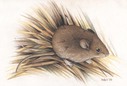
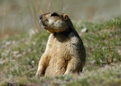


With over 2000 living species placed in about 30 families, rodents are by far the largest order of mammals, at least in terms of number of taxa (well over 40% of mammalian species belong to the order Rodentia!). Rodents range in size from pygmy mice weighing 5 gms to capybaras, the largest of which weigh over 70 kg. They are found around the world except in Antarctica, New Zealand, and on some oceanic islands. Ecologically, they are incredibly diverse. Some species spend their entire lives above the ground in the canopy of rainforests; others seldom emerge from beneath the ground. Some species are highly aquatic, while others are equally specialized for life in deserts. Many are to some degree omnivorous; others are highly specialized, eating, for example, only a few species of invertebrates or fungi.
Despite their morphological and ecological diversity, all rodents share one characteristic: their dentition is highly specialized for gnawing. All rodents have a single pair of upper and a single pair of lower incisors, followed by a gap ( diastema), followed by one or more molars or premolars. No rodent has more than one incisor in each quadrant, and no rodent has canines. Rodent incisors are rootless, growing continuously. Their anterior and lateral surfaces are covered with enamel, but their posterior surface is not. During gnawing, as the incisors grind against each other, they wear away the softer dentine, leaving the enamel edge as the blade of a chisel. This "self sharpening" system is very effective and is one of the keys to the enormous success of rodents.
The condition of a dominant pair of incisors used for gnawing, followed by a long diastema, is not unique to rodents, and in fact rodents are relative latecomers to this condition (even though as a group, they have a very old fossil history, going back to Paleocene times). It is even seen in a group of therapsids (ancestors of mammals), the tritylodonts, which lived during the Jurassic. Multituberculates, a very large and successful but now extinct group of early mammals, had a similar pattern. So do wombats, hyraxes, aye-ayes, and lagomorphs, to give a few examples chosen from modern mammals. Rodents have specialized in gnawing to an extreme, however, seen in few or no other groups of vertebrates.
The main muscle used in chewing by rodents is the masseter, and the rodents can be divided into several groups based on exactly how they use these muscles. These groupings have been used in several ways in the past to classify rodents.
Other characteristics of rodents include a well-developed pterygoid region of the skull (the pterygoid muscles, which originate in this region, participate in the movement of the lower jaw), an elongate glen o id fossa with no postglenoid process (permitting the lower jaw to move forwards and backwards), complete zygomatic arch with the midportion spanned by the jugal, large paroccipital processes, alisphenoid canal present (but sometimes short and hard to see), and region between the orbits sometimes constricted and sometimes with postorbital processes. Other characteristics include clavicles usually present, the feet primitively 5-toed (the pollex often very small), digits 2-5 with claws, pollex and hallux sometimes with a nail, reduced temporalis muscle, and many others.


Here, we follow Wilson and Reeder (2005) in recognizing five suborders, Anomaluromorpha, Castorimorpha, Hystricomorpha, Myomorpha, and Sciuromorpha. The myomorph, sciuromorph, anomaluromorph, and castorimorph taxa have sciurognathous jaw morphology, while hystricomorphs have hystricognathous jaw morphology.
Literature and references cited
Carleton, M. D. 1984. Introduction to rodents. Pp. 255-265 in Anderson, S. and J. K. Jones, Jr. (eds). Orders and Families of Recent Mammals of the World. John Wiley and Sons, N.Y. xii+686 pp.
Feldhamer, G. A., L. C. Drickamer, S. H. Vessey, and J. F. Merritt. 1999. Mammalogy. Adaptation, Diversity, and Ecology. WCB McGraw-Hill, Boston. xii+563pp.
Savage, R. J. G. and M. R. Long. 1986. Mammal Evolution, an Illustrated Guide. Facts of File Publications, New York. 259 pp.
Vaughan, T. A. 1986. Mammalogy. Third Edition. Saunders College Publishing, Fort Worth. vii+576 pp.
Vaughan, T. A., J. M. Ryan, N. J. Czaplewski. 2000. Mammalogy. Fourth Edition. Saunders College Publishing, Philadelphia. vii+565pp.
Wilson, D. E., and D. M. Reeder. 1993. Mammal Species of the World, A Taxonomic and Geographic Reference. 2nd edition. Smithsonian Institution Press, Washington. xviii+1206 pp.
Wilson, D. E., and D. M. Reeder. 2005. Mammal Species of the World, A Taxonomic and Geographic Reference. 3rd edition. Smithsonian Institution Press, Washington. xxxv+2142 pp.
Click on a name below to learn more about that family:
Suborder Sciurognathi
- Family Aplodontiidae
- Family Sciuridae
- Family Castoridae
- Family Geomyidae
- Family Heteromyidae
- Family Dipodidae
- Family Muridae
- Family Anomaluridae
- Family Pedetidae
- Family Ctenodactylidae
- Family Myoxidae
Suborder Hystricognathi
- Family Bathyergidae
- Family Hystricidae
- Family Petromuridae
- Family Thryonomyidae
- Family Erethizontidae
- Family Chinchillidae
- Family Dinomyidae
- Family Caviidae
- Family Hydrochaeridae
- Family Dasyproctidae
- Family Agoutidae
- Family Ctenomyidae
- Family Octodontidae
- Family Abrocomidae
- Family Echimyidae
- Family Capromyidae
- Family Heptaxodontidae
- Family Myocastoridae
Contributors
Phil Myers (author), Museum of Zoology, University of Michigan-Ann Arbor.
Glossary
- bilateral symmetry
-
having body symmetry such that the animal can be divided in one plane into two mirror-image halves. Animals with bilateral symmetry have dorsal and ventral sides, as well as anterior and posterior ends. Synapomorphy of the Bilateria.
- chemical
-
uses smells or other chemicals to communicate
- endothermic
-
animals that use metabolically generated heat to regulate body temperature independently of ambient temperature. Endothermy is a synapomorphy of the Mammalia, although it may have arisen in a (now extinct) synapsid ancestor; the fossil record does not distinguish these possibilities. Convergent in birds.
- motile
-
having the capacity to move from one place to another.
- sexual
-
reproduction that includes combining the genetic contribution of two individuals, a male and a female
- tactile
-
uses touch to communicate