Ochotonidaepikas


Diversity
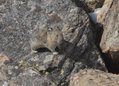
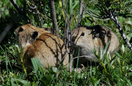
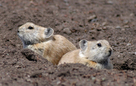
The family Ochotonidae comprises the pikas, including one extant genus Ochotona and 30 currently recognized species (Hoffman and Smith, 2005). There are more than 30 extinct genera that have been identified as far back as the Eocene, one of which, Prolagus, went extinct in the late 18th century (Dawson, 1969; Ge et al., 2012). Today, Ochotonidae represents approximately 1/3 of lagomorph diversity (Smith, 2008). Their range is primarily in Asia although there are two North American species, American pikas and collared pikas (Smith et al., 1990). They range in weight from 70 to 300 g and are usually less than 285 mm in length (Smith, 2008). There is no known sexual dimorphism (Vaughan et al., 2011). The main differences from leporids are their (i) small size, (ii) small, rounded ears, (iii) concealed tails, (iv) lack of supraorbital processes, and (v) 2, rather than 3, upper molars (Smith, 2008). There are two main ecotypes, one of which is associated with rocky habitats and the other with meadow, steppe, forest, and shrub habitats. Each ecotype is associated with specific life history traits as well as behavior. Most species fall within one of these ecotypes, although there are some species which exhibit intermediate characteristics (Smith, 2008). (Ge, et al., 2012; Hoffman and Smith, 2005; Smith, et al., 1990; Smith, 2008; Vaughan, et al., 2011)
Geographic Range
Although the historic range of ochotonids included Asia, Europe, northern Africa, and North America, today ochotonids are found only in Asia and the high mountains of western North America. Their center of diversity is China, where 24 species are found (Smith, 2008). In Asia, pikas are found as far west as Iran, south into India and Myanmar, and into northern Russia. The two Nearctic species are found in the central Alaskan Range, the Canadian Rockies, and the Rockies, Sierra Nevadas, and Great Basin in the continental United States (IUCN, 2011). (IUCN, 2011)
- Biogeographic Regions
- nearctic
- palearctic
Habitat
Ochotonids are found in two distinct habitats: talus habitat or in meadow, steppe, forest, and shrub habitats. Talus-dwellers inhabit the crevices between rocks on mountain slopes. These species forage in the alpine meadows that abut the rocks or from the vegetation that grows between the rocks. They are found across a wide altitudinal gradient from below 90 to above 6000 m (Nowak and Wilson, 1991). Species that are typically found in talus habitats are alpine pikas, silver pikas, collared pikas, Chinese red pikas, Glover’s pikas, Himalayan pikas, northern pikas, Ili pikas, large-eared pikas, American pikas, Royle’s pikas, and Turkestan red pikas (Smith, 2008). (Nowak and Wilson, 1991; Smith, 2008)
Non-talus dwelling pikas are found in a variety of vegetated habitats where they forage and produce burrows. The meadows they occupy are also typically at high elevation. The meadow-burrowing pikas are all found in Asia and include Gansu pikas, black-lipped pikas, Daurian pikas, Kozlov’s pikas, Ladak pikas, Muli pikas, Nubra pikas, steppe pikas, Moupin pikas, and Thomas’s pikas (Smith, 2008). (Nowak and Wilson, 1991; Smith, 2008)
Some species, including Pallas's pikas and Afghan pikas are known to occur in both habitat types and are referred to as intermediate species (Smith, 2008). Although intermediate in habitat, these species exhibit the life-history traits and behavior of meadow-dwelling pikas. (Nowak and Wilson, 1991; Smith, 2008)
- Habitat Regions
- temperate
- terrestrial
- Terrestrial Biomes
- savanna or grassland
- forest
- mountains
Systematic and Taxonomic History
Ochotonidae is one of two families in the order Lagomorpha (Huchon et al., 2002; Meredith et al. 2011). The other is Leporidae (rabbits and hares). Lagomorpha and Rodentia make up the clade Glires (Meng et al., 2003). Glires and Archonta make up the clade Euarchontaglires (Murphy et al. 2001). Ochotonidae was first described in 1897 by Oldfield Thomas. Synonyms include Lagomina Gray, 1825; Lagomyidae Lillijeborg, 1866; and Prolaginae Gureev, 1960 (Hoffman and Smith, 2005). (Hoffman and Smith, 2005; Huchon, et al., 2002; Lanier and Olson, 2009; Lissovsky, et al., 2007; Meng and Wyss, 2001; Meredith, et al., 2011; Murphy, et al., 2001; Niu, et al., 2004; Yu, et al., 2000)
The relationships within the family and within the genus Ochotona are less well understood. Recent molecular phylogenies include Yu et al. (2000), Niu et al. (2004), Lissovsky et al. (2007), and Lanier and Olson (2009). Current understanding is that there are three subgenera within Ochotona based on both morphological and molecular evidence (Yu et al., 2000). The relationships between these and the independence of some species is still highly debated (Hoffman and Smith, 2005). (Hoffman and Smith, 2005; Lanier and Olson, 2009; Lissovsky, et al., 2007; Niu, et al., 2004; Yu, et al., 2000)
-
- Synonyms
-
- Lagomina Gray, 1825
- Lagomyidae Lillijeborg, 1866
- Prolaginae Gureev, 1960
Physical Description
Ochotonids exhibit little physical variation. They are generally small, ranging in body length from 125 to 300 mm and weighing 70 to 300 g (Nowak and Wilson, 1991; Smith, 2008). Unlike leporids, pikas lack a visible tail and have short rounded ears with large, valvular flaps and openings at the level of the skull (Vaughan et al. 2011). The ears are only weakly movable (Diersing, 1984) and their nostrils can be completely closed (Nowak and Wilson, 1991). They have short limbs with the hind limbs barely longer than the forelimbs (Nowak and Wilson, 1991). They have 5 front digits and 4 hind digits all with curved claws (Vaughan et al., 2011). The soles of the feet are covered by long hair but the distal pads are exposed (Diersing, 1984). They are digitigrade while running but plantigrade during slow movement (Vaughan et al., 2011). Ochotonids have 22 thoracolumbar vertebrae and lack a pubic symphysis (Diersing, 1984). (Diersing, 1984; MacArthur and Wang, 1973; Nowak and Wilson, 1991; Vaughan, et al., 2011)
The skull is generally similar to that of leporids. It is flattened, exhibits fenestration, and is constricted between the orbits (Vaughan et al., 2011). The ochotonid tooth formula is 2/1 0/0 3/2 2/3=26. The first incisors are ever-growing and completely enameled, while the second are small, peg-like, and directly behind the first. The cutting edge of the first incisor is v-shaped (Nowak and Wilson, 1991). They have a long post-incisor diastema and hypsodont, rootless cheek teeth. Occlusion is limited to one side at a time, with associated large masseter and pterygoideus muscles allowing for transverse movement while the cheekteeth have transverse ridges and basins (Vaughan et al., 2011). The zygomatic arch is slender and not vertically expanded. The jugal is long and projects more than halfway from the zygomatic root of the squamosal to the external auditory meatus (Diersing, 1984). Unlike leporids, pikas lack a supraorbital process. Their rostrum is short and narrow and the maxilla has a single large fenestra (Vaughan et al., 2011). The auditory bulla, which is fused with the petrosal, are spongiose and porous. The bony auditory meatus is laterally directed and not strongly tubular (Diersing, 1984). (Diersing, 1984; Nowak and Wilson, 1991; Vaughan, et al., 2011)
Pikas exhibit no sexual dimorphism (Nowak and Wilson, 1991). Males lack a scrotum and both sexes have a cloaca, which opens on a mobile apex supported by a rod of tail vertebrae (Diersing, 1984; Vaughan et al., 2011). Females have between 4 and 6 mammae, with one pair inguinal and one to two pairs pectoral (Nowak and Wilson, 1991). Ochotonid coats consist of long, dense, fine fur and are usually grayish brown, although they vary inter- and intra-specifically depending on habitat. Some ochotonids go through two molts, with darker fur during the summer and grayer pelage in the winter (Diersing, 1984). (Diersing, 1984; Nowak and Wilson, 1991; Vaughan, et al., 2011)
Physiologically, pikas have a high metabolic rate. They also have low thermal conductance and, even at moderately high temperatures, low ability to dissipate heat (MacArthur and Wang, 1973). (MacArthur and Wang, 1973)
- Other Physical Features
- endothermic
- homoiothermic
- bilateral symmetry
- Sexual Dimorphism
- sexes alike
Reproduction
Most talus-dwelling pika species are monogamous or polygynous (Gliwicz, Witczuk, and Pagacz, 2005; Smith, 2008). There are some notable exceptions, including documented cases of polygynandry in collared pikas (Zgurski and Hik, 2012). In contrast, meadow-dwelling pikas exhibit monogamous, polygynous, polyandrous, or polygynandrous mating systems, depending on the sex ratio at the beginning of the breeding season (Smith and Dobson, 2004). (Gliwicz, et al., 2005; Smith and Dobson, 2004; Smith, 2008; Zgurski and Hik, 2012)
- Mating System
- monogamous
- polyandrous
- polygynous
- polygynandrous (promiscuous)
The talus-dwelling species, such as American pikas, exhibit low annual production of offspring (Smith 1988). Typically, talus-dwelling pikas produce only one successfully weaned litter of 1 to 5 young a year. On average, approximately 2 young per mother are successfully weaned per year (Smith, 2008). Juveniles reach sexual maturity as yearlings (Smith et al., 1990). Some talus-dwelling species exhibit absentee maternal care typical of lagomorphs (Whitworth 1984). The gestation period of American pikas, for example, is 30.5 days (Smith, 1988) and their breeding season lasts between late April and the end of July (Markham and Whicker, 1973). In contrast, meadow-dwelling species have much higher potential reproductive output, but it varies depending on environmental conditions. They can produce litters that are twice as large as those of talus-dwellers up to every three weeks during the reproductive season. The reproductive season of O. curzoniae, a meadow-dwelling species, generally lasts from March to late August but can vary between years and sites (Yang et al., 2007). On average, multiple litters are produced each year and most young are successfully weaned (Smith, 2008). Further increasing their reproductive output, juveniles born early in the breeding season will reach sexual maturity and breed during the summer of their birth (Smith et al., 1990). (Diersing, 1984; Markham and Whicker, 1973; Smith, et al., 1990; Smith, 1988; Smith, 2008; Whitworth, 1984; Yang, et al., 2007)
- Key Reproductive Features
- iteroparous
- seasonal breeding
- gonochoric/gonochoristic/dioecious (sexes separate)
- sexual
Some talus-dwelling species exhibit absentee maternal care typical of lagomorphs (Whitworth 1984). Males and females of some meadow-dwelling species participate in affiliative behavior with juveniles as well as mate guarding and defending territories (e.g. Smith and Gao, 1991). Juveniles of meadow-dwelling species also continue to live on the parental territory through at least their first year (Smith, 2008). (Smith and Gao, 1991; Smith, 2008; Whitworth, 1984)
- Parental Investment
- altricial
- male parental care
- female parental care
-
pre-fertilization
-
protecting
- male
-
protecting
-
pre-hatching/birth
-
protecting
- male
-
protecting
- pre-independence
- post-independence association with parents
- inherits maternal/paternal territory
Lifespan/Longevity
The average mortality of talus-dwelling species is low and many are long lived compared to most small mammals (Smith et al., 1990). American pikas live on average 3 to 4 years but have been known to live up to 7 years (Forsyth et al, 2005). Meadow-dwelling species experience high annual mortality and few individuals live more than two years (Smith, 1988). (Forsyth, et al., 2005; Smith, et al., 1990; Smith, 1988)
Behavior
North American talus-dwelling pikas occupy and defend territories individually, particularly against members of the same sex. Except for when they come together to mate, these talus-dwelling pikas are relatively asocial (Smith et al., 1990). Dominance does not extend beyond an individual’s territory. Most social interactions are aggressive and chases and fights result from conspecific intrusion, and the theft of vegetation from the haypiles of conspecifics. Talus-dwelling ochotonids use vocalizations and scent-marking to demarcate their territories, which are relatively large and make up about ½ of their home range (Svendsen 1979; Smith, 2008). Territories are usually established near the edge of the talus/vegetation border and vary in size depending on species and the productivity of the adjoining vegetation (Smith, 2008). They are typically between 450 and 525 m^2 (Gliwicz, Witczuk, and Pagacz, 2005).
Some Asian talus-dwelling pika species defend territories as pairs. The pair uses the same main shelter and spend most of their time in the same area. They cooperate in hay-storage and communicate using vocalizations, but are asocial outside of the pair. Primarily the males demarcate the territory and defend it against intruders. These territories are typically larger than those of individual pikas, around 900 m^2 per pair, and these pikas live at much higher densities. (For a more complete discussion see Gliwicz, Witczuk, and Pagacz (2005).)
In contrast, the Asian meadow-dwelling species are considered to exhibit highly social family groups, consisting of adults as well as young of the year in communal burrows (Smith, 2008). These species live at much higher densities (more than 300/ha) than the talus-dwelling species and experience more variation in population density over seasons and between years (Nowak and Wilson, 1991). Meadow-dwelling pika exhibit both affiliative behaviors, such as allogrooming, nose rubbing, and various forms of contact, within family groups, as well as aggressive territorial behaviors toward non-family members. In addition, family members communicate with vocalizations, which can elicit affiliative contact (Smith, 2008). They also defend territories as a family unit and share communal hay piles (Smith et al., 1990). Their territories are also demarcated by scent-marking and vocalizations.
Both ecotypes are poor dispersers and typically do not range far from their natal territory. In talus-dwellers, an individual with control of a territory typically maintains it for life, and upon it’s death will be replaced by a juvenile born in a nearby territory and usually of the same sex (Smith, 1974; Smith, 2008). In meadow-dwellers, juveniles will stay in their home burrow for the first year and then less than half will disperse to nearby territories. Males are more likely to disperse, but even then typically move only a few territories away (Smith, 2008).
Pikas do not hibernate during the winter, but instead stay active in their burrows or rocky crevices. During this time they consume the food caches that they collected during the summer (Smith et al., 1990). Ochotonids are primarily diurnal, but can be active at all times of day as well as throughout the year (Nowak, 1991). They are frequently observed sunning themselves on rocks during warmer months (Diersing, 1984; Nowak, 1991). (Diersing, 1984; Gliwicz, et al., 2005; Nowak and Wilson, 1991; Smith, et al., 1990; Smith, 1974; Smith, 2008; Svedsen, 1979)
- Key Behaviors
- terricolous
- motile
- territorial
- social
Communication and Perception
Most pika species vocalize both for predator alarms and territory defense (Smith et al., 1990; Nowak, 1991; Trefry and Hik, 2009). They produce a high-pitched 'eek' or 'kie' that is ventriloquial in character (Diersing, 1984). They have also been demonstrated to eavesdrop on the alarm calls of heterospecifics, such as marmots and ground squirrels (Trefry and Hik, 2009). Ochotonids can also communicate danger by drumming on the ground with their hind feet (Diersing, 1984). Meadow-dwelling, burrowing species produce multiple types of vocalizations, many of which are used in socializing with conspecifics (Smith, 2008). Low chattering and mewing noises have also been reported (Diersing, 1984). Both ecotypes also use scent-marking (Smith, 2008). (Diersing, 1984; Nowak and Wilson, 1991; Smith, et al., 1990; Smith, 2008; Trefry and Hik, 2009)
- Other Communication Modes
- scent marks
- vibrations
Food Habits
Pikas are generalist herbivores and typically collect caches of vegetation, which they live off of during the winter. They consume leaves and stems of forbs and shrubs as well as seeds and leaves of grasses; sometimes they also consume small amounts of animal matter (Diersing, 1984). Like most leporids, they produce two types of feces: soft caecotroph and hard pellets (Smith, 2008). During the summer, after the breeding season, pikas accumulate large stores of many different plants in their haypiles, which they then store for winter consumption. Their foraging patterns varies throughout the season in accordance with which plants are available, preferred, and/or have the highest nutritional content, selecting for higher caloric, lipid, water, and protein content (Smith and Weston, 1990). The foraging habits of pikas affect plant communities. Pikas alter which plants are collected while foraging as well as how far they go to forage, depending on whether they are being immediately consumed or are being added to a haypile. This variation results in a mosaic of plant community composition (Huntly, Smith and Ivins, 1986). This selective foraging has been demonstrated to stabilize plant community composition and slow the process of succession, as well as reduce the number of seeds in the soil (Huntly, Smith and Ivins, 1986; Khlebnikov and Shtilmark, 1965). (Huntly, et al., 1986; Khlebnikov and Shtilmark, 1965; Smith and Weston, 1990; Smith, 2008)
- Foraging Behavior
- stores or caches food
Predation
Pikas serve as an important food source to both birds and mammals in all of the habitats they occupy. Meadow-dwelling pikas, in particular, can be a preferred food or buffer species throughout the year, but are especially important prey in the winter as they are still active while similarly sized rodents hibernate (Smith et al., 1990). During high-density years, burrowing pikas can be the most important food source for Asian steppe predators, sometimes making up more than 80% of a predator’s diet (Sokolov, 1965). In addition to being prey for small to medium-sized carnivores, pikas are also often consumed by larger carnivores, including wolves and brown bears (Smith et al., 1990). (Smith, et al., 1990; Sokolov, 1965)
- Anti-predator Adaptations
- cryptic
-
- Known Predators
-
- wolves (Canis lupus)
- hawks, eagles, and buzzards (Accipitridae)
- owls (Strigiformes)
- polecats and weasels (Mustela)
- brown bears (Ursus arctos)
- American black bears (Ursus americanus)
- Asiatic black bears (Ursus thibetanus)
Ecosystem Roles
In addition to the important ecosystem roles that ochotonids serve as consumers and as prey, they also alter their environments through bioturbative ecosystem engineering. The burrowing of meadow-dwelling pikas improves soil quality and reduces erosion (Smith and Foggin, 1999). The accumulation and decomposition of leftover caches and the feces in burrow systems also helps increase the organic content of soil (Smith et al., 1990). In addition to their abiotic benefits, pika burrows are used by other mammals and birds and their caches are often consumed by other herbivores (Smith et al., 1990). The haypiles of talus-dwelling pikas also improve soil quality upon decomposition, thereby facilitating plant colonization of the talus (Smith et al., 1990). (Lai and Smith, 2003; Smith and Foggin, 1999; Smith, et al., 1990)
- Ecosystem Impact
- soil aeration
- keystone species
Economic Importance for Humans: Positive
Traditionally, pikas were a valuable source of fur throughout Asia and in particular the Soviet Union (Smith et al., 1990). Additionally, some traditional herdsmen selectively graze their livestock in the winter on pika meadows where haypiles are exposed above the snow (Loukashkin, 1940). (Loukashkin, 1940; Smith, et al., 1990)
- Positive Impacts
- body parts are source of valuable material
Economic Importance for Humans: Negative
Some ochotonid species are considered pests in Asian countries, where they are believed to compete with livestock for forage, erode soil, and negatively affect agricultural crops such as apple trees and wheat (Smith et al., 1990). It has been demonstrated that pikas can harm agricultural crops (Smith et al., 1990) but no control studies have been conducted that support other claims. Pika foraging has been implicated in accelerating range deterioration but only in areas that were already overgrazed (Shi, 1983; Zhong, Zhou and Sun, 1985). Millions of hectares have been subject to poisoning in an effort to control pika numbers with mixed results, including extermination of non-target species (Smith et al., 1990). (Shi, 1983; Smith, et al., 1990; Zhong, et al., 1985)
- Negative Impacts
- crop pest
Conservation Status
Today, four ochotonid species (silver pikas, Hoffmann's pikas, Ili pikas, Kozlov's pikas) are classified as endangered or critically endangered due to habitat loss, poisoning, or climate change (Smith, 2008; IUCN, 2011). Additionally, many subspecies are threatened due to low vagility and its effects on stochastic metapopulation dynamics (Smith, 2008). Not enough is known about many species (10% are still considered data deficient by the IUCN) to truly assess their conservation status. Until the systematics of the family is better understood it will be hard to determine the outlook for many populations. Due to their low tolerance for high temperatures and low vagility, ochotonids are considered especially vulnerable to warming so the need for conservation efforts is expected to increase with climate change (Holtcamp, 2010). (Holtcamp, 2010; IUCN, 2011; Smith, 2008)
-
- IUCN Red List [Link]
- Not Evaluated
Contributors
Aspen Reese (author), Yale University, Eric Sargis (editor), Yale University, Hayley Lanier (editor), University of Wyoming - Casper, Tanya Dewey (editor), University of Michigan-Ann Arbor.
Glossary
- Nearctic
-
living in the Nearctic biogeographic province, the northern part of the New World. This includes Greenland, the Canadian Arctic islands, and all of the North American as far south as the highlands of central Mexico.

- Palearctic
-
living in the northern part of the Old World. In otherwords, Europe and Asia and northern Africa.
- acoustic
-
uses sound to communicate
- altricial
-
young are born in a relatively underdeveloped state; they are unable to feed or care for themselves or locomote independently for a period of time after birth/hatching. In birds, naked and helpless after hatching.
- bilateral symmetry
-
having body symmetry such that the animal can be divided in one plane into two mirror-image halves. Animals with bilateral symmetry have dorsal and ventral sides, as well as anterior and posterior ends. Synapomorphy of the Bilateria.
- chemical
-
uses smells or other chemicals to communicate
- cryptic
-
having markings, coloration, shapes, or other features that cause an animal to be camouflaged in its natural environment; being difficult to see or otherwise detect.
- endothermic
-
animals that use metabolically generated heat to regulate body temperature independently of ambient temperature. Endothermy is a synapomorphy of the Mammalia, although it may have arisen in a (now extinct) synapsid ancestor; the fossil record does not distinguish these possibilities. Convergent in birds.
- female parental care
-
parental care is carried out by females
- folivore
-
an animal that mainly eats leaves.
- forest
-
forest biomes are dominated by trees, otherwise forest biomes can vary widely in amount of precipitation and seasonality.
- herbivore
-
An animal that eats mainly plants or parts of plants.
- iteroparous
-
offspring are produced in more than one group (litters, clutches, etc.) and across multiple seasons (or other periods hospitable to reproduction). Iteroparous animals must, by definition, survive over multiple seasons (or periodic condition changes).
- keystone species
-
a species whose presence or absence strongly affects populations of other species in that area such that the extirpation of the keystone species in an area will result in the ultimate extirpation of many more species in that area (Example: sea otter).
- male parental care
-
parental care is carried out by males
- monogamous
-
Having one mate at a time.
- motile
-
having the capacity to move from one place to another.
- mountains
-
This terrestrial biome includes summits of high mountains, either without vegetation or covered by low, tundra-like vegetation.
- native range
-
the area in which the animal is naturally found, the region in which it is endemic.
- polyandrous
-
Referring to a mating system in which a female mates with several males during one breeding season (compare polygynous).
- polygynandrous
-
the kind of polygamy in which a female pairs with several males, each of which also pairs with several different females.
- polygynous
-
having more than one female as a mate at one time
- scent marks
-
communicates by producing scents from special gland(s) and placing them on a surface whether others can smell or taste them
- seasonal breeding
-
breeding is confined to a particular season
- sexual
-
reproduction that includes combining the genetic contribution of two individuals, a male and a female
- social
-
associates with others of its species; forms social groups.
- soil aeration
-
digs and breaks up soil so air and water can get in
- stores or caches food
-
places a food item in a special place to be eaten later. Also called "hoarding"
- tactile
-
uses touch to communicate
- temperate
-
that region of the Earth between 23.5 degrees North and 60 degrees North (between the Tropic of Cancer and the Arctic Circle) and between 23.5 degrees South and 60 degrees South (between the Tropic of Capricorn and the Antarctic Circle).
- terrestrial
-
Living on the ground.
- territorial
-
defends an area within the home range, occupied by a single animals or group of animals of the same species and held through overt defense, display, or advertisement
- tropical savanna and grassland
-
A terrestrial biome. Savannas are grasslands with scattered individual trees that do not form a closed canopy. Extensive savannas are found in parts of subtropical and tropical Africa and South America, and in Australia.
- savanna
-
A grassland with scattered trees or scattered clumps of trees, a type of community intermediate between grassland and forest. See also Tropical savanna and grassland biome.
- temperate grassland
-
A terrestrial biome found in temperate latitudes (>23.5° N or S latitude). Vegetation is made up mostly of grasses, the height and species diversity of which depend largely on the amount of moisture available. Fire and grazing are important in the long-term maintenance of grasslands.
- vibrations
-
movements of a hard surface that are produced by animals as signals to others
- visual
-
uses sight to communicate
References
Diersing, V. 1984. Lagomorphs. Pp. 241-248 in S Anderson, J Jones Jr., eds. Orders and Families of Recent Mammals of the World. New York: John Wiley & Sons.
Forsyth, N., F. Elder, J. Shay, W. Wright. 2005. Lagomorphs (rabbits, pikas and hares) do not use telomere-directed replicative aging in vitro. Mechanisms of Aging and Development, 126: 685-691.
Ge, D., Z. Zhang, L. Xia, Q. Zhang, Y. Ma, Q. Yang. 2012. Did the expansion of C4 plants drive extinction and massive range contraction of micromammals? Inferences from food preference and historical biogeography of pikas. Paleogeography, Paleoclimatology, Paleoecology, 326: 160-171.
Gliwicz, J., J. Witczuk, S. Pagacz. 2005. Spatial behaviour of the rock-dwelling pika (Ochotona hyperborea). Journal of Zoology, 267: 113-120.
Hoffman, R., A. Smith. 2005. Family Ochotonidae. Pp. 185-193 in D Wilson, D Reeder, eds. Mammal Species of the World: A Taxonomic and Geographic Reference. Baltimore: Johns Hopkins University Press.
Holtcamp, W. 2010. Silence of the pikas. Bioscience, 60: 8-12.
Huchon, D., O. Madsen, M. Sibbald, K. Ament, M. Stanhope, F. Catzeflis, W. de Jong, E. Douzery. 2002. Rodent phylogeny and a timescale for the evolution of Glires: Evidence from an extensive taxon sampling using three nuclear genes. Molecular Biology and Evolution, 19: 1053-1065.
Huntly, N., A. Smith, B. Ivins. 1986. Foraging behavior of the pika (Ochotona princeps), with comparisons of grazing versus haying. Journal of Mammalogy, 67: 139-148.
IUCN, 2011. "IUCN Red List of Threatened Species" (On-line). Accessed January 15, 2012 at http://www.iucnredlist.org.
Khlebnikov, A., F. Shtilmark. 1965. [Fauna of Siberian pine forests in Siberia and its use]. Moscow-Leningrad: Nauka.
Lai, C., A. Smith. 2003. Keystone status of plateau pikas (Ochotona curzoniae): effect of control on biodiversity of native birds. Biodiversity and Conservation, 12: 1901-1912.
Lanier, H., L. Olson. 2009. Inferring divergence times within pikas (Ochotona spp.) using mtDNA and relaxed molecular dating techniques. Molecular Phylogenetics and Evolution, 53: 1-12.
Lissovsky, A., N. Ivanova, A. Borisenko. 2007. Molecular phylogenetics and taxonomy of the subgenus Pika (Ochotona, Lagomorpha). Journal of Mammalogy, 88: 1195-1204.
Loukashkin, A. 1940. On the pikas of North Manchuria. Journal of Mammalogy, 21: 402-405.
MacArthur, R., L. Wang. 1973. Physiology of thermoregulation in pika, Ochotona princeps. Canadian Journal of Zoology, 51: 11-16.
Markham, O., F. Whicker. 1973. Seasonal data on reproduction and body weights of pikas (Ochotona princeps). Journal of Mammalogy, 54: 496-498.
Meng, J., A. Wyss. 2001. The Morphology of Tribosphenomys (Rodentiaformes, Mammalia): Phylogenetic Implications for Basal Glires. Journal of Mammalian Evolution, 8: 1-71.
Meredith, R., J. Janeck, J. Gatesy, O. Ryder, C. Fisher, E. Teeling, A. Goodbla, E. Eizirik, T. Simao, T. Stadler, D. Rabosky, R. Honeycutt, J. Flynn, C. Ingram, C. Steiner, T. Williams, T. Robinson, A. Burk-Herrick, M. Westerman, N. Ayoub, M. Springer, W. Murphy. 2011. Impacts of the Cretaceous Terrestrial Revolution and KPg Extinction on Mammal Diversification. Science, 334: 521-524.
Murphy, W., E. Eizirik, W. Johnson, Y. Zhang, O. Ryder, S. O'Brien. 2001. Molecular phylogenetics and the origins of placental mammals. Nature, 409: 614-618.
Niu, Y., F. Wei, M. Li, X. Liu, Z. Feng. 2004. Phylogeny of pikas (Lagomorpha, Ochotona) inferred from mitochondrial cytochrome b sequences. Folia Zoologica, 53: 141-155.
Nowak, R., D. Wilson. 1991. Walker’s Mammals of the World.. Baltimore: Johns Hopkins University Press.
Shi, Y. 1983. [On the influence of rangeland vegetation to the density of plateau pikas (Ochotona cuzoniae)]. Acta Theriologica Sinica, 3: 181-187.
Smith, A. 1988. Patterns of pika (genus Ochotona) life history variation. Pp. 233-256 in M Boyce, ed. Evolution of Life Histories of Mammals: Theory and Pattern. New Haven: Yale University Press.
Smith, A. 1974. The distribution and dispersal of pikas: influences of behavior and climate. Ecology, 55: 1368-1376.
Smith, A. 2008. The world of pikas. Pp. 89-102 in P Alves, N Ferrand, K Hackland, eds. Lagomorph Biology: Evolution, Ecology, and Conservation. Berlin: Springer-Verlag.
Smith, A., F. Dobson. 2004. Social dynamics in the plateau pika. Pp. 1016-1019 in M Bekoff, ed. Encyclopedia of Behavior, Vol. 3, 1 Edition. Westport, CT: Greenwood Publishing Group.
Smith, A., J. Foggin. 1999. The plateau pika (Ochotona curzoniae) is a keystone species for biodiversity on the Tibetan plateau.. Animal Conservation, 2: 235-240.
Smith, A., N. Formozov, R. Hoffmann, C. Zheng, M. Erbajeva. 1990. The pikas. Pp. 14-60 in J Chapman, J Flux, eds. Rabbits, Hares and Pikas: Status Survey and Conservation Action Plan. Gland, Switzerland: International Union for the Conservation of Nature.
Smith, A., W. Gao. 1991. Social relationships of adult Black-Lipped Pikas (Ochotona curzoniae). Journal of Mammalogy, 72: 231-247.
Smith, A., M. Weston. 1990. Ochotona Princeps. Mammalian Species, 352: 1-2.
Sokolov, V. 1965. [Fauna of Siberian pine forests and its use]. Moscow-Leningrad: Nauka.
Svedsen, G. 1979. Territoriality and behavior in a population of pikas (Ochotona princeps). Journal of Mammalogy, 60: 324-330.
Trefry, S., D. Hik. 2009. Eavesdropping on the neighborhood: collard pika (Ochotona collaris) responses to playback calls of conspecifics and heterospecifics. Ethology, 115: 928-938.
Vaughan, T., J. Ryan, N. Czaplewski. 2011. Mammalogy. Sudbury, MA: Jones and Bartlett Publishers.
Whitworth, M. 1984. Maternal care and behavioral development in pikas (Ochotona princeps). Animal Behavior, 32: 743-752.
Yang, S., B. Yin, Y. Cao, Y. Zhang, J. Wang, W. Wei. 2007. [Reproduction and behavior of plateau pikas (Ochotona curzoniae Hodgson) under predation risk: A field experiment]. Polish Journal of Ecology, 55: 127-138.
Yu, N., C. Zheng, Y. Zhang, W. Li. 2000. Molecular systematics of pikas (genus Ochotona) inferred from mitochondrial DNA sequences. Molecular Phylogenetics and Evolution, 16: 85-95.
Zgurski, J., D. Hik. 2012. Polygynandry and even-sexed dispersal in a population of collared pikas, Ochotona collaris. Animal Behavior, 83: 1075-1082.
Zhong, W., Q. Zhou, C. Sun. 1985. [The basic characteristics of the rodent pests on the pasture in Inner Mongolia and the ecological strategies of controlling]. Acta Theriologica Sinica, 5: 241-249.