Neotominaedeer mice, woodrats, and relatives



Diversity
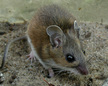
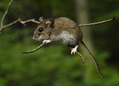
Neotominae is a large New World subfamily of rat-like or mouse-like cricetid rodents. This group includes the packrats and woodrats, as well as the familiar deer and white-footed mice. There are 124 neotomine species in 16 genera, distributed among four tribes. (Musser and Carleton, 2005)
Geographic Range
Neotomines are distributed throughout North America, from Panama to Alaska and northern Canada. (Nowak, 1999)
- Biogeographic Regions
- nearctic
- neotropical
Habitat
These rodents occupy a wide variety of habitats, including prairies, savannahs, mountains, deserts, marshes, agricultural fields, suburban human dwellings, forest edges, scrub forests, rainforest, coniferous forest, and temperate and tropical deciduous forest. (Nowak, 1999)
- Habitat Regions
- temperate
- tropical
- terrestrial
- Terrestrial Biomes
- taiga
- desert or dune
- savanna or grassland
- chaparral
- forest
- rainforest
- scrub forest
- mountains
- Other Habitat Features
- suburban
- agricultural
- riparian
Physical Description
Neotomines are mouse-like or rat-like in overall appearance, with long tails and prominent ears. Their head and body length ranges from 50 to 351 mm, and their tails range from 35 to 240 mm. They weigh 6 to 450 grams. In some species, males weigh more, and are sometimes longer than females (Schulte-Hostedde et al. 2001). Male neotomines often have prominant ventral sebaceous glands, but they usually lack rump, hip, and flank glands. The pelage is usually dense, ranges from short to long, and can be either coarse or soft. Neotomines range in color from pale to very dark, and they are yellowish, reddish, brown, or gray on their dorsal surface and buffy, grayish, reddish, or white below. Some populations consist of more than one color morph (Smith 1972). The tail is sparsely haired or bushy with a tufted tip and ranges from long and skinny to short and fat. The large ears are usually sparsely haired.
The neotomine dental formula is 1/1, 0/0, 0/0, 3/3 = 16. The incisors are usually orthodont or opisthodont, and the molars are rooted and have a biserial cusp arrangement (in contrast to the triserial cusp arrangement of most murines). Each molar has a longitudinal enamel crest (mure or murid). The molars range from brachydont to hypsodont, and the third molars are usually smaller than the second molars. Neotomine skulls have flat or slightly recessed pterygoid fossae, and small to medium-sized auditory bullae. In addition, the mastoid bullae are not hypertrophied, and an accessory tympanum is always present. The malleus is of parallel construction. Other neotomine skull characteristics vary widely. A skeletal characteristic shared by most neotomines is the presence of a prominant neural spine on the second thoracic vertebra. Finally, neotomines have one- or two-chambered stomachs, and the tongue bears a single circumvallate papilla. (Carleton and Musser, 1984; Nowak, 1999; Schulte-Hostedde, et al., 2001; Smith, 1972)


- Other Physical Features
- endothermic
- homoiothermic
- bilateral symmetry
- polymorphic
- Sexual Dimorphism
- sexes alike
- male larger
Reproduction
Many neotomines are promiscuous, and males and females only associate for the brief time required for mating. Others are polygynous or monogamous. In some species, a copulatory plug forms during mating and seals the female's reproductive tract, hindering the success of matings with other males. (Carleton and Musser, 1984; Gubernick and Teferi, 2000; Nowak, 1999)
- Mating System
- monogamous
- polygynous
- polygynandrous (promiscuous)
Neotomines are capable of reproducing year round, although for some populations there is a decline in reproduction during the winter months and a peak in the spring and summer. Ovulation is spontaneous. Females of some species experience a postpartum estrus and conceive their next litter while nursing the first, although the embryos do not implant until lactation ceases. Gestation lasts 20 to 40 days, and there are anywhere from one to nine young per litter, although litters of two to three are most common. The young are born blind and naked, and their eyes open between 11 and 21 days after birth. They nurse for three to four weeks. They often remain with their mother for a month after weaning. Females reach sexual maturity as young as 28 days, while males reach sexual maturity when they are at least 42 days old. (Carleton and Musser, 1984; Nowak, 1999)
- Key Reproductive Features
- iteroparous
- seasonal breeding
- year-round breeding
- gonochoric/gonochoristic/dioecious (sexes separate)
- sexual
- fertilization
- viviparous
- delayed implantation
- post-partum estrous
Females build nests where they nurse their altricial young for three to four weeks. In some species, males assist females in caring for their offspring, grooming them, carrying them, and huddling with them. In fact, such male parental care has been shown to enhance survival of the young (Gubernick and Teferi 2000). (Gubernick and Teferi, 2000; Nowak, 1999)
- Parental Investment
- altricial
-
pre-fertilization
- provisioning
-
protecting
- female
-
pre-hatching/birth
-
provisioning
- female
-
protecting
- female
-
provisioning
-
pre-weaning/fledging
-
provisioning
- female
-
protecting
- male
- female
-
provisioning
-
pre-independence
-
provisioning
- female
-
protecting
- male
- female
-
provisioning
Lifespan/Longevity
Most neotomines do not live more than a year in the wild. The record lifespan in captivity is eight years, five months. (Nowak, 1999)
Behavior
Neotomines are terrestrial, arboreal, or semiarboreal rodents. Their feet are modified for running or for climbing. Those that are terrestrial often build runways through ground vegetation or through leaf litter that they follow as they go about their daily business. Neotomines can be nocturnal, diurnal, or crepuscular. They are active year round, though some experience bouts of torpor during cold weather. Some species dig burrows or use those made by other animals, others build elaborate nests on the ground or in trees, and some simply shelter in natural crevices. Some neotomine species are solitary, territorial, and aggressive, while others are fairly social and may even share nests with several conspecifics. (Nowak, 1999)
- Key Behaviors
- arboreal
- scansorial
- cursorial
- terricolous
- diurnal
- nocturnal
- crepuscular
- motile
- daily torpor
- solitary
- territorial
- social
Communication and Perception
Neotomines have acute senses of smell, touch, hearing, and vision. They communicate with a variety of calls, chirps, and even miniature "wolf" howls. Some neotomines communicate with ultrasounds (Smith 1972), and they occasionally drum their front feet rapidly on the ground when alarmed. Chemical signaling with pheromones and scent marks is an extremely important aspect of communication in this group, as these odors can quickly send a signal about the identity and status of an individual (Ma et al. 1999). (Ma, et al., 1999; Nowak, 1999; Smith, 1972)
- Other Communication Modes
- pheromones
- scent marks
- Perception Channels
- visual
- tactile
- acoustic
- ultrasound
- chemical
Food Habits
Neotomines range from herbivorous to carnivorous in their eating habits. Foods consumed include seeds, roots, stems, cacti, pine needles, leaves, nuts, fungi, insects, scorpions, other rodents, and carrion. Many store food inside of their burrows for later consumption. (Nowak, 1999)
- Primary Diet
-
carnivore
- eats terrestrial vertebrates
- insectivore
- eats non-insect arthropods
- scavenger
- herbivore
- omnivore
- mycophage
- Foraging Behavior
- stores or caches food
Predation
These rodents are preyed upon by a variety of other animals, including hawks, owls, snakes, and carnivorous mammals. Neotomines may avoid predation by decreasing their activity level on bright, moonlit nights (Topping et al. 1999), and by having fur that matches their background (Kaufman 1974). Additionally, some neotomine species have tails that break off easily when grabbed, allowing escape. (Carleton and Musser, 1984; Kaufman, 1974; Nowak, 1999; Topping, et al., 1999)
- Anti-predator Adaptations
- cryptic
-
- Known Predators
-
- hawks Accipitridae
- owls Strigiformes
- snakes Serpentes
- mammalian carnivores Carnivora
Ecosystem Roles
Neotomines are primary and higher-level consumers, and they are a staple food source for various predators. Also, they impact forest regeneration by consuming seeds and tree seedlings (Cote et al. 2003) and they may be important dispersers of mycorrhizal fungi (Mangan and Adler 2000). Finally, neotomines are parasitized by ticks and mites, fleas, lice, bot flies, nematodes, and flukes (Kinsella 1991). (Cote, et al., 2003; Kinsella, 1991; Mangan and Adler, 2000; Nowak, 1999)
- ticks and mites Acari
- fleas Siphonaptera
- lice Anoplura
- bot flies Sarcophagidae
- nematodes Nematoda
- flukes Trematoda
Economic Importance for Humans: Positive
Neotomines are bred in captivity and used as lab animals for genetic and physiological research. (Nowak, 1999)
- Positive Impacts
- research and education
Economic Importance for Humans: Negative
Some neotomines are vectors of human diseases, including hantavirus and lyme disease. Also, they are considered nuisance animals when they enter homes, raid food stores, gnaw on household goods, and build nests in unwelcome places. (Nowak, 1999)
- Negative Impacts
-
injures humans
- carries human disease
- household pest
Conservation Status
The IUCN lists 15 neotomine species as lower risk, 9 species as vulnerable, 13 species as endangered (6 Neotoma species, 5 Peromyscus species, Jico deer mice, Habromys simulatus, and Cozumel harvest mice, Reithrodontomys spectabilis), and 2 species as critically endangered (Slevin's mice, Peromyscus slevini, and false canyon mice, Peromyscus pseudocrinitus, both of Mexico). In addition, one species has gone extinct recently (Pemberton's deer mice, Peromyscus pembertoni, from San Pedro Nolasco Island in Mexico). Many neotomine species have small, restricted ranges, narrow habitat requirements, and are threatened by encroaching human development. (IUCN, 2004)
-
- IUCN Red List [Link]
- Not Evaluated
Other Comments
The earliest fossils of existing neotomine genera are from the late Miocene of North America. (Musser and Carleton, 2005)
Contributors
Tanya Dewey (editor), Animal Diversity Web.
Allison Poor (author), University of Michigan-Ann Arbor.
Glossary
- Nearctic
-
living in the Nearctic biogeographic province, the northern part of the New World. This includes Greenland, the Canadian Arctic islands, and all of the North American as far south as the highlands of central Mexico.

- Neotropical
-
living in the southern part of the New World. In other words, Central and South America.
- acoustic
-
uses sound to communicate
- agricultural
-
living in landscapes dominated by human agriculture.
- altricial
-
young are born in a relatively underdeveloped state; they are unable to feed or care for themselves or locomote independently for a period of time after birth/hatching. In birds, naked and helpless after hatching.
- arboreal
-
Referring to an animal that lives in trees; tree-climbing.
- bilateral symmetry
-
having body symmetry such that the animal can be divided in one plane into two mirror-image halves. Animals with bilateral symmetry have dorsal and ventral sides, as well as anterior and posterior ends. Synapomorphy of the Bilateria.
- bog
-
a wetland area rich in accumulated plant material and with acidic soils surrounding a body of open water. Bogs have a flora dominated by sedges, heaths, and sphagnum.
- carnivore
-
an animal that mainly eats meat
- chaparral
-
Found in coastal areas between 30 and 40 degrees latitude, in areas with a Mediterranean climate. Vegetation is dominated by stands of dense, spiny shrubs with tough (hard or waxy) evergreen leaves. May be maintained by periodic fire. In South America it includes the scrub ecotone between forest and paramo.
- chemical
-
uses smells or other chemicals to communicate
- crepuscular
-
active at dawn and dusk
- cryptic
-
having markings, coloration, shapes, or other features that cause an animal to be camouflaged in its natural environment; being difficult to see or otherwise detect.
- delayed implantation
-
in mammals, a condition in which a fertilized egg reaches the uterus but delays its implantation in the uterine lining, sometimes for several months.
- desert or dunes
-
in deserts low (less than 30 cm per year) and unpredictable rainfall results in landscapes dominated by plants and animals adapted to aridity. Vegetation is typically sparse, though spectacular blooms may occur following rain. Deserts can be cold or warm and daily temperates typically fluctuate. In dune areas vegetation is also sparse and conditions are dry. This is because sand does not hold water well so little is available to plants. In dunes near seas and oceans this is compounded by the influence of salt in the air and soil. Salt limits the ability of plants to take up water through their roots.
- diurnal
-
- active during the day, 2. lasting for one day.
- endothermic
-
animals that use metabolically generated heat to regulate body temperature independently of ambient temperature. Endothermy is a synapomorphy of the Mammalia, although it may have arisen in a (now extinct) synapsid ancestor; the fossil record does not distinguish these possibilities. Convergent in birds.
- fertilization
-
union of egg and spermatozoan
- folivore
-
an animal that mainly eats leaves.
- forest
-
forest biomes are dominated by trees, otherwise forest biomes can vary widely in amount of precipitation and seasonality.
- frugivore
-
an animal that mainly eats fruit
- granivore
-
an animal that mainly eats seeds
- herbivore
-
An animal that eats mainly plants or parts of plants.
- insectivore
-
An animal that eats mainly insects or spiders.
- internal fertilization
-
fertilization takes place within the female's body
- iteroparous
-
offspring are produced in more than one group (litters, clutches, etc.) and across multiple seasons (or other periods hospitable to reproduction). Iteroparous animals must, by definition, survive over multiple seasons (or periodic condition changes).
- marsh
-
marshes are wetland areas often dominated by grasses and reeds.
- monogamous
-
Having one mate at a time.
- motile
-
having the capacity to move from one place to another.
- mountains
-
This terrestrial biome includes summits of high mountains, either without vegetation or covered by low, tundra-like vegetation.
- mycophage
-
an animal that mainly eats fungus
- native range
-
the area in which the animal is naturally found, the region in which it is endemic.
- nocturnal
-
active during the night
- omnivore
-
an animal that mainly eats all kinds of things, including plants and animals
- pheromones
-
chemicals released into air or water that are detected by and responded to by other animals of the same species
- polygynandrous
-
the kind of polygamy in which a female pairs with several males, each of which also pairs with several different females.
- polygynous
-
having more than one female as a mate at one time
- polymorphic
-
"many forms." A species is polymorphic if its individuals can be divided into two or more easily recognized groups, based on structure, color, or other similar characteristics. The term only applies when the distinct groups can be found in the same area; graded or clinal variation throughout the range of a species (e.g. a north-to-south decrease in size) is not polymorphism. Polymorphic characteristics may be inherited because the differences have a genetic basis, or they may be the result of environmental influences. We do not consider sexual differences (i.e. sexual dimorphism), seasonal changes (e.g. change in fur color), or age-related changes to be polymorphic. Polymorphism in a local population can be an adaptation to prevent density-dependent predation, where predators preferentially prey on the most common morph.
- rainforest
-
rainforests, both temperate and tropical, are dominated by trees often forming a closed canopy with little light reaching the ground. Epiphytes and climbing plants are also abundant. Precipitation is typically not limiting, but may be somewhat seasonal.
- riparian
-
Referring to something living or located adjacent to a waterbody (usually, but not always, a river or stream).
- scavenger
-
an animal that mainly eats dead animals
- scent marks
-
communicates by producing scents from special gland(s) and placing them on a surface whether others can smell or taste them
- scrub forest
-
scrub forests develop in areas that experience dry seasons.
- seasonal breeding
-
breeding is confined to a particular season
- sexual
-
reproduction that includes combining the genetic contribution of two individuals, a male and a female
- social
-
associates with others of its species; forms social groups.
- solitary
-
lives alone
- stores or caches food
-
places a food item in a special place to be eaten later. Also called "hoarding"
- suburban
-
living in residential areas on the outskirts of large cities or towns.
- swamp
-
a wetland area that may be permanently or intermittently covered in water, often dominated by woody vegetation.
- tactile
-
uses touch to communicate
- taiga
-
Coniferous or boreal forest, located in a band across northern North America, Europe, and Asia. This terrestrial biome also occurs at high elevations. Long, cold winters and short, wet summers. Few species of trees are present; these are primarily conifers that grow in dense stands with little undergrowth. Some deciduous trees also may be present.
- temperate
-
that region of the Earth between 23.5 degrees North and 60 degrees North (between the Tropic of Cancer and the Arctic Circle) and between 23.5 degrees South and 60 degrees South (between the Tropic of Capricorn and the Antarctic Circle).
- terrestrial
-
Living on the ground.
- territorial
-
defends an area within the home range, occupied by a single animals or group of animals of the same species and held through overt defense, display, or advertisement
- tropical
-
the region of the earth that surrounds the equator, from 23.5 degrees north to 23.5 degrees south.
- tropical savanna and grassland
-
A terrestrial biome. Savannas are grasslands with scattered individual trees that do not form a closed canopy. Extensive savannas are found in parts of subtropical and tropical Africa and South America, and in Australia.
- savanna
-
A grassland with scattered trees or scattered clumps of trees, a type of community intermediate between grassland and forest. See also Tropical savanna and grassland biome.
- temperate grassland
-
A terrestrial biome found in temperate latitudes (>23.5° N or S latitude). Vegetation is made up mostly of grasses, the height and species diversity of which depend largely on the amount of moisture available. Fire and grazing are important in the long-term maintenance of grasslands.
- ultrasound
-
uses sound above the range of human hearing for either navigation or communication or both
- visual
-
uses sight to communicate
- viviparous
-
reproduction in which fertilization and development take place within the female body and the developing embryo derives nourishment from the female.
- year-round breeding
-
breeding takes place throughout the year
References
Carleton, M., G. Musser. 1984. Muroid rodents. Pp. 289-379 in S Anderson, J Jones Jr., eds. Orders and Families of Recent Mammals of the World. New York: John Wiley and Sons.
Chaline, J., P. Mein, F. Petter. 1977. Les grandes lignes d'une classification évolutive des Muroidea. Mammalia, 41: 245-252.
Cote, M., J. Ferron, R. Gagnon. 2003. Impact of seed and seedling predation by small rodents on early regeneration establishment of black spruce. Canadian Journal of Forest Research, 33(12): 2362-2371.
Ellerman, J. 1941. The Families and Genera of Living Rodents, vol. II. London: British Museum (Natural History).
Gubernick, D., T. Teferi. 2000. Adaptive significance of male parental care in a monogamous mammal. Proceedings of the Royal Society of London, 267(1439): 147-150.
Hooper, E., G. Musser. 1964. The glans penis in neotropical cricetines (Family Muridae) with comments on the classification of muroid rodents. Miscellaneous Publications of the Museum of Zoology of the Univeristy of Michigan, 123: 1-57.
IUCN, 2004. "2004 IUCN Red List of Threatened Species" (On-line). Accessed June 27, 2005 at www.redlist.org.
Jansa, S., M. Weksler. 2004. Phylogeny of muroid rodents: relationships within and among major lineages as determined by IRBP gene sequences. Molecular Phylogenetics and Evolution, 31: 256-276.
Kaufman, D. 1974. Adaptive coloration in Peromyscus polionotus: experimental selection by owls. Journal of Mammalogy, 55(2): 271-283.
Kinsella, J. 1991. Comparison of helminths of 3 species of mice, Podomys floridanus, Peromyscus gossypinus, and Peromyscus polionotus, from southern Florida. Canadian Journal of Zoology, 69(12): 3078-3083.
Ma, W., D. Wiesler, M. Novotny. 1999. Urinary volatile profiles of the deermouse (Peromyscus maniculatus) pertaining to gender and age. Journal of Chemical Ecology, 25(3): 417-431.
Mangan, S., G. Adler. 2000. Consumption of arbuscular mycorrhizal fungi by terrestrial and arboreal small mammals in a Panamanian cloud forest. Journal of Mammalogy, 81(2): 563-570.
Michaux, J., A. Reyes, F. Catzeflis. 2001. Evolutionary history of the most speciose mammals: molecular phylogeny of muroid rodents. Molecular Biology and Evolution, 18: 2017-2031.
Miller, G., J. Gidley. 1918. Synopsis of supergeneric groups of rodents. Journal of the Washington Academy of Science, 8: 431-448.
Musser, G., M. Carleton. 2005. Superfamily Muroidea. D Wilson, D Reeder, eds. Mammal Species of the World. Baltimore and London: The Johns Hopkins University Press.
Nowak, R. 1999. Walker's Mammals of the World, vol. 2. Baltimore and London: The Johns Hopkins University Press.
Reig, O. 1980. A new fossil genus of South American cricetid rodents allied to Wiedomys, with an assessment of the Sigmodontinae. Journal of Zoology, 192: 257-281.
Schulte-Hostedde, A., J. Millar, G. Hickling. 2001. Sexual dimorphism in body composition of small mammals. Canadian Journal of Zoology, 79(6): 1016-1020.
Simpson, G. 1945. The principles of classification and a classification of mammals. Bulletin of the American Museum of Natural History, 85: 1-350.
Smith, J. 1972. Sound production by infant Peromyscus maniculatus (Rodentia:Myomorpha). Journal of Zoology, 168: 369-379.
Smith, M., J. Carmon, J. Gentry. 1972. Pelage color polymorphism in Peromyscus polionotus. Journal of Mammalogy, 53(4): 824-833.
Steppan, S., R. Adkins, J. Anderson. 2004. Phylogeny and divergence-date estimates of rapid radiations in muroid rodents based on multiple nuclear genes. Systematic Biology, 53(4): 533-553.
Topping, M., J. Millar, J. Goddard. 1999. The effects of moonlight on nocturnal activity in bushy-tailed wood rats (Neotoma cinerea). Canadian Journal of Zoology, 77(3): 480-485.
Tullberg, T. 1899. Uber das system der nagethiere: eine phylogenetische studie. Nova Acta Regiae Societatis Scientiarum Upsaliensis, 3: 1-514.