Myotis leibiieastern small-footed myotis
Geographic Range
Eastern small-footed bats are native to the United States and Canada. Despite their wide distribution, they are one of the rarest bats in North America. They range from as far north as Ontario, to as far south as Georgia, and as far west as Oklahoma. This species has been documented in the Ozark Mountains in Arkansas, Missouri and Oklahoma. They are found in the Appalachian mountains north to southeastern Canada and the New England states. In the southern parts of its range, eastern small-footed bats are limited to caves and rocky outcrops in Virginia, North Carolina, South Carolina, Tennessee, Kentucky, Alabama, and northern Georgia. ("Federal register notice of a 90-day finding for Eastern Small-footed bat and Northern Long-eared bat", 2011; Best and Jennings, 1997; Chapman, 2007; Linzey, 1998)
Habitat
Eastern small-footed bats roost during the spring and summer in buildings, bridges, caves, mines, in hollow trees, tunnels, rock crevices, beneath rocks, and in rocky outcrops. They prefer colder and drier hibernacula than other Myotis species, often seeking the coldest locations within a cave to roost and hibernate. They prefer short caves - often less than 150 m in length - and return to the same spot annually. Across combined observed accounts, 125 caves and mines throughout its range host eastern small-footed bats during hibernation. 90% of their habitat is on private land which is vulnerable to alteration. Only 3.8% of U.S. Forest service upland hardwood, bottomland hardwood, and pine-hardwood forests can support them. Required elevation differs by geographic location. In the 1997 Mammalian Species account by Best and Jennings, the elevation in Virginia is reported at 750 m but ranges from 300-750 m in Pennsylvania. ("Conservation Assessments for Five Forest Bats Species in the Eastern United States", 2006; "Federal register notice of a 90-day finding for Eastern Small-footed bat and Northern Long-eared bat", 2011; Best and Jennings, 1997; Chapman, 2007; Johnson and Gates, 2008; Veilleux, 2007)
- Habitat Regions
- temperate
- terrestrial
- Terrestrial Biomes
- forest
- Other Habitat Features
- caves
-
- Range elevation
- 300 to 750 m
- 984.25 to 2460.63 ft
Physical Description
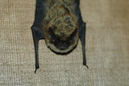
Eastern small-footed bats are the smallest of the Myotis genus ranging from 3.5 to 6 grams with a length of 75 to 85 mm and a wing span of 210 to 250 mm. They derive their common name from the fact that they are the only member of the Myotis genus (in Virginia) with feet measuring less than 9 mm. The sexes are similar in coloration and size. Their fur is black at the root with brown shiny tips; this gives them their glossy yellowish-brown appearance. Their underside is a dull grayish-brown. The completely black face mask is its most unique feature. They also have black ears, wings, and interfemoral membranes (a stretch of membrane that extends between the legs to the tail). Females have two mammae (or milk glands). They have a strongly keeled calcar (a protruding piece of cartilage on the hind leg to support the intefemoral membrance) and a pointed tragus (a fleshy projection which extends from the base of the ear) of about 9 mm in length. Their skulls are relatively flat, short, and fragile. Their dental formula is: incisors 2/3, canines 1/1, premolars 3/3, and molars 3/3. Their foreheads slope gradually away from the rostrum lacking the typical prominent forehead of most Myotis species. Their ears are erect and broad at the base and their noses are blunt. Their tails extend beyond the interfemoral membrane. ("Federal register notice of a 90-day finding for Eastern Small-footed bat and Northern Long-eared bat", 2011; Best and Jennings, 1997; Chapman, 2007)
Eastern small-footed bats are often confused with two other members of the bat family: little brown myotis (Myotis lucifugus) and tri-colored bats (Perimyotis subflavus). Little brown myotis are larger in size and have no mask or keel on the calcar. Tri-colored bats have a blunt tragus, no keel, and a pink coloring on their forearm. ("Federal register notice of a 90-day finding for Eastern Small-footed bat and Northern Long-eared bat", 2011; Best and Jennings, 1997; Chapman, 2007)
- Other Physical Features
- endothermic
- bilateral symmetry
- Sexual Dimorphism
- sexes alike
-
- Range mass
- 3.5 to 6 g
- 0.12 to 0.21 oz
-
- Range length
- 75 to 85 mm
- 2.95 to 3.35 in
-
- Range wingspan
- 210 to 250 mm
- 8.27 to 9.84 in
Reproduction
Swarming, which is important for mate selection, breeding, and hibernacula selection, occurs from late summer through early fall. Eastern small-footed bats are polygynandrous, so both males and females have many mates. (Best and Jennings, 1997; Johnson and Gates, 2007)
In the late summer through early fall, many eastern small-footed bats gather together in the same spot. This is important for breeding and for choosing locations to hibernate. Both males and females have multiple mates. (Best and Jennings, 1997; Johnson and Gates, 2007)
- Mating System
- polygynandrous (promiscuous)
Maternity colonies have been observed in New Hampshire, Kentucky, North Carolina, South Carolina, and Ontario. These colonies ranged from a 12 to 33 individuals and the roost locations were diverse. Thirteen individuals were found in rock crevices, 20 in guardrail crevices on a concrete bridge, 12 behind a shed door, and others in wood piles and picnic shelters. Little is known about their breeding behavior. However, one study found a maternity colony in an abandoned cabin in North Carolina. This colony consisted of 33 individuals: 22 adult females, 1 non-reproductive adult male, 3 juvenile males, and 7 juvenile females. Female eastern small-footed bats typically have one offspring per year between May and July. Sperm is stored throughout hibernation, where the female is in sub-estrus, from mid-November to March. Mating has also been documented during the winter if a male and a female are aroused from hibernation at the same time. This is when the female releases an egg and delayed fertilization occurs. ("Federal register notice of a 90-day finding for Eastern Small-footed bat and Northern Long-eared bat", 2011; Best and Jennings, 1997; Chapman, 2007; O'Keefe and LaVoie, 2011; Wimsatt, 1945)
During reproduction, males initiate copulation and the female's role is passive. Both sexes are quiet throughout copulation. The male mounts the female and tilts her head back to a 90 degree angle by biting down on the hairs at the base of the skull. The male uses his thumbs to further stabilize his position on the female as he moves his projecting penis below her interfemoral membrane. The interfemoral membrane does not hinder posterior copulation due to the free movement of the penis. After the male has entered the female the penis appears to move rapidly and independently of any movements by the hindquarters. ("Federal register notice of a 90-day finding for Eastern Small-footed bat and Northern Long-eared bat", 2011; Best and Jennings, 1997; Chapman, 2007; O'Keefe and LaVoie, 2011; Wimsatt, 1945)
Newborn eastern small-footed bats weigh 20 to 35% of their mother's weight. This large size is thought to limit the number of offspring to one because another fetus would overexert the mother while foraging. There is a 1:1 sex ratio at birth. When raising young, females choose the site with the highest solar exposure to decrease energy expenditure. Warmer sites provide thermal stability for young when the female goes out on foraging trips. ("Federal register notice of a 90-day finding for Eastern Small-footed bat and Northern Long-eared bat", 2011; Best and Jennings, 1997; Chapman, 2007; O'Keefe and LaVoie, 2011; Wimsatt, 1945)
- Key Reproductive Features
- seasonal breeding
- gonochoric/gonochoristic/dioecious (sexes separate)
- sexual
- viviparous
- sperm-storing
- delayed fertilization
-
- Breeding interval
- Once per year
-
- Breeding season
- Fall swarm
-
- Range number of offspring
- 1 to 1
-
- Average number of offspring
- 1
- AnAge
Only females care for newborns. They go on foraging trips for food, feed, protect, and teach the young. Mothers leave the newborn soon after birth to look for food. Weaning time is not known. (Best and Jennings, 1997; Wimsatt, 1945)
- Parental Investment
- female parental care
-
pre-weaning/fledging
-
provisioning
- female
-
protecting
- female
-
provisioning
-
pre-independence
-
provisioning
- female
-
protecting
- female
-
provisioning
Lifespan/Longevity
Eastern small-footed bats are estimated to live 6 to 12 years in the wild. This is affected by predation, habitat availability, and exposure to parasites or fungi. The maximum recorded lifespan in captivity was 12 years. In northern regions of their geographic range, males have a higher rate of survival (75%) than females (42%). This could be due to the higher demand on females during reproduction. Maternity colonies are not always present, so there is a large increase in energy output for thermoregulation of both pregnant and lactating females compared to those involved in clustering behaviors. ("Conservation Assessments for Five Forest Bats Species in the Eastern United States", 2006; Best and Jennings, 1997; Hitchcock, et al., 1984)
Eastern small-footed bats live about 6 to 12 years in the wild. This depends on predators, habitat availability, and parasites or fungi. In captivity, the maximum recorded lifespan is 12 years. In northern parts of their range, males are more likely to survive than females. The survival rate for males is 75% and the survival rate for females is 42%. This might be because females have to use more energy during the reproduction process. Females who are pregnant or nursing also use more energy to stay warm if they aren't in a maternity colony. ("Conservation Assessments for Five Forest Bats Species in the Eastern United States", 2006; Best and Jennings, 1997; Hitchcock, et al., 1984)
-
- Range lifespan
Status: captivity - 12 (high) years
- Range lifespan
-
- Typical lifespan
Status: wild - 6 to 12 years
- Typical lifespan
-
- Average lifespan
Status: captivity - 12 years
- AnAge
- Average lifespan
Behavior
Eastern small-footed bats are nocturnal, roosting during the day and active at night. During the summer, they leave their roosting site around dusk and they fly in and out of caves and through open fields. Their flying height varies from 0.3 to 6.0 meters. In flight, their unusually slow and fluttering motion makes them easily distinguishable from other small bats. They have a very strong homing instinct, returning to the same cave to hibernate even if placed in a different location. They do not migrate but change roosting locations within the same general area. They typically switch roosts daily unless weather prohibits foraging. This frequent relocation requires an abundance of adequate roosting locations within the home range. Males and females have different criteria for roosting selection and these preferences change during the reproductive season, such as the desire by females for roosts with more solar exposure. ("Federal register notice of a 90-day finding for Eastern Small-footed bat and Northern Long-eared bat", 2011; Best and Jennings, 1997; Chapman, 2007)
Eastern small-footed bats hibernate during the winter. Within their range, they are the last to hibernate in mid-November and the first species to rise in March. Although they have been observed hibernating in groups, they more often hibernate alone. They hibernate horizontally rather than vertically and sometimes hibernate on cave floors. Their small size allows them to squeeze into small cracks and crevices which provide protection from predators. They prefer to hibernate at the mouths of caves and are often found in caves less than 150 meters long. During torpor, the body's temperature drops to between 1 to 2 degrees Celsius more than the hibernaculum, so they are able to withstand temperatures below freezing. Compared to normal energy output this drop in body temperature decreases their metabolic rate by 95%. They rise from torpor at -9 degrees Celsius. They wake from torpor more often than co-hibernating species, predisposing them to quick depletion of winter energy reserves. This increase awakening from torpor is hypothesized to support immune function despite the estimation that these arousals account for 84% of winter energy output. Between December and April the total body mass lost is around 16%. ("Federal register notice of a 90-day finding for Eastern Small-footed bat and Northern Long-eared bat", 2011; Best and Jennings, 1997; Chapman, 2007)
- Key Behaviors
- troglophilic
- flies
- nocturnal
- motile
- sedentary
- hibernation
Home Range
Eastern small-footed bats have been recorded moving a maximum of 1.1 km within their home range. (Best and Jennings, 1997)
Communication and Perception
Eastern small-footed bats use echolocation to locate prey, typical among insectivores. Search-phase call is first used to locate an insect. While in pursuit, an approach-phase call is emitted. Immediately before consuming prey, they emit a terminal-phase call or feeding buzz. Both the approach-phase (pre-buzz call) and the terminal-phase (buzz call) are used to determine a range on the prey and maintain the location of the prey item. In one study the duration of search-phase calls were 2.8 ms and other studies have recorded calls as long as 5 ms. The minimum frequency is 46.1 KHz and the maximum frequency is 84.5 KHz. (Chapman, 2007; Murray, et al., 2001; Parsons, et al., 1997)
- Communication Channels
- acoustic
- Perception Channels
- visual
- tactile
- acoustic
- echolocation
- chemical
Food Habits
Eastern small-footed bats are insectivores, specializing in nocturnal flying insects while staying 1 to 3 meters off the ground. Prey include beetles, mosquito, moths, and flies. Occasionally they feed on ants as well. One study of fecal samples during fall swarming found 7 orders, 1 superfamily, and 9 families of insects. The insects were very diverse but moths were consumed most abundantly. When foraging, they fly slowly and often feed over water where nocturnal insects are abundant and sometimes fill their stomach within an hour of the start of their foraging bout. They have also been observed feeding in dense forested areas using a gleaning strategy, which is described as eating insects from plants, rocks, or other surfaces. This type of feeding is considered the most efficient for bats with long-wing loading. Eastern small-footed bats have short, broad wings with rounded wingtips to that improve maneuverability in dense vegetation. ("Conservation Assessments for Five Forest Bats Species in the Eastern United States", 2006; "Notes on Foraging Activity of Female Myotis leibii in Maryland", 2009; Johnson and Gates, 2007; Norberg and Rayner, 1987)
- Primary Diet
- carnivore
- Animal Foods
- insects
Predation
During the summer months, eastern small footed bats are found in cracks and crevices which reduce the chance of predation. Little is known about their specific predators, but bats are often eaten by hawks and owls, snakes, raccoons, and weasels. ("Federal register notice of a 90-day finding for Eastern Small-footed bat and Northern Long-eared bat", 2011)
Ecosystem Roles
Eastern small footed bats host the following ectoparasites: mites (Androlaelaps casalis and Cryptonyssus desultorius), chiggers (Leptotrombidium myotis), and ticks (Ornithodorus kelleyi). Females in maternity colonies have an increased probability of exposure to ectoparasites. Females in northern regions of the United States are more likely to carry the Trypanosoma infection originating from the bat bug, Cimex brevis. These bat bugs are common in maternity colonies in Ontario. (Gikas, et al., 2011; Hitchcock, et al., 1984; Timpone, et al., 2011)
- mites (Androlaelaps casalis)
- mites (Cryptonyssus desultorius)
- chiggers (Leptotrombidium myotis)
- ticks (Ornithodorus kelleyi)
- white-nose syndrome fungus (Geomyces destructans)
- bat bug (Cimex brevis )
- Trypanosoma
Economic Importance for Humans: Positive
Eastern small footed bats prey on beetles and mosquitoes which are pests to humans and agriculture. ("Current Status and Conservation Strategy for the Eastern Small-footed Myotis", 2001; Jones, et al., 2009)
- Positive Impacts
- controls pest population
Economic Importance for Humans: Negative
Bats are noted carriers of rabies, which results in a nearly 100% fatality rate if not detected on time. Five out of 45 species of bats has been recorded transmitting rabies to humans in the United States, one of which is suspected to be the eastern small-footed bat. Eastern small-footed bats might also carry Histoplasmosis, a disease caused by the fungus Histoplasma capsulatum. This presents itself with flu-like symptoms and disappears with antifungals and sometimes without need for any treatment. Eastern small-footed bats might also be considered a nuisance because they roost in human structures. ("Current Status and Conservation Strategy for the Eastern Small-footed Myotis", 2001; Best and Jennings, 1997)
- Negative Impacts
-
injures humans
- carries human disease
Conservation Status
In 2009, eastern small-footed bats were placed on many conservation lists. In Alabama, Arkansas, Massachusetts, Maryland, Maine, New Hampshire, New Jersey, Oklahoma, Pennsylvania, West Virginia, Virginia, and Vermont they are listed as "critically imperiled." In Georgia, Kentucky, North Carolina, and New York, they are listed as "imperiled." In Connecticut, Massachusetts, Maryland, Missouri, North Carolina, New Jersey, New York, Ohio, Oklahoma, Tennessee, Virginia, West Virginia, and Georgia they are listed as a "species of special concern." In Pennsylvania and Vermont they are listed as "threatened," and are endangered statewide in New Hampshire. On a federal level, they are listed as a species of special concern and are under review by the Endangered Species Act. The state of Michigan gives them no special status and the IUCN Red List lists them as least concern with a stable population trend. They are threatened by human activities because of their reliance on forests for foraging. Activities such as logging, wind turbines, agricultural and urban development contribute to foraging habitat destruction. Oil, gas, and mineral development can destroy roosting sites and contaminents can leak into local streams. ("Federal register notice of a 90-day finding for Eastern Small-footed bat and Northern Long-eared bat", 2011; Terwilliger, 1991)
Temperate North American bats are now threatened by a fungal disease called “white-nose syndrome.” This disease has devastated eastern North American bat populations at hibernation sites since 2007. The fungus, Geomyces destructans, grows best in cold, humid conditions that are typical of many bat hibernacula. The fungus grows on, and in some cases invades, the bodies of hibernating bats and seems to result in disturbance from hibernation, causing a debilitating loss of important metabolic resources and mass deaths. Mortality rates at some hibernation sites have been as high as 90%. (Cryan, 2010; National Park Service, Wildlife Health Center, 2012)
-
- IUCN Red List
-
Least Concern
More information
-
- IUCN Red List
-
Least Concern
More information
-
- US Federal List
- No special status
-
- CITES
- No special status
-
- State of Michigan List
- No special status
Other Comments
Eastern small-footed bats became a larger focus for research after fossils were discovered in the Cumberland Cave in Maryland in 1972 and Big Bone Cave in Tennessee in 1975. Species which are closely related were discovered in 1908 in caves in Arkansas from the middle to late Pleistocene. Myotis lebii was previously thought to be a subspecies of Myotis cililabrum, which inhabits areas of the western United States. Genetic analysis isolated M. leibii to its current range and determined that it was a separate species. (Best and Jennings, 1997; Linzey, 1998)
A 1979 study estimated that just 15 percent of all Myotis individuals in late-summer in Virginia caves are Myotis leibii. It is unclear if this is a true indication of their rarity or if they are often overlooked due to their concealed roosting sites within caves. (Best and Jennings, 1997; Linzey, 1998)
Contributors
Victoria Scott (author), Radford University, Karen Powers (editor), Radford University, Kiersten Newtoff (editor), Radford University, Melissa Whistleman (editor), Radford University, Catherine Kent (editor), Special Projects.
Glossary
- Nearctic
-
living in the Nearctic biogeographic province, the northern part of the New World. This includes Greenland, the Canadian Arctic islands, and all of the North American as far south as the highlands of central Mexico.

- acoustic
-
uses sound to communicate
- bilateral symmetry
-
having body symmetry such that the animal can be divided in one plane into two mirror-image halves. Animals with bilateral symmetry have dorsal and ventral sides, as well as anterior and posterior ends. Synapomorphy of the Bilateria.
- carnivore
-
an animal that mainly eats meat
- chemical
-
uses smells or other chemicals to communicate
- delayed fertilization
-
a substantial delay (longer than the minimum time required for sperm to travel to the egg) takes place between copulation and fertilization, used to describe female sperm storage.
- echolocation
-
The process by which an animal locates itself with respect to other animals and objects by emitting sound waves and sensing the pattern of the reflected sound waves.
- endothermic
-
animals that use metabolically generated heat to regulate body temperature independently of ambient temperature. Endothermy is a synapomorphy of the Mammalia, although it may have arisen in a (now extinct) synapsid ancestor; the fossil record does not distinguish these possibilities. Convergent in birds.
- female parental care
-
parental care is carried out by females
- forest
-
forest biomes are dominated by trees, otherwise forest biomes can vary widely in amount of precipitation and seasonality.
- hibernation
-
the state that some animals enter during winter in which normal physiological processes are significantly reduced, thus lowering the animal's energy requirements. The act or condition of passing winter in a torpid or resting state, typically involving the abandonment of homoiothermy in mammals.
- insectivore
-
An animal that eats mainly insects or spiders.
- motile
-
having the capacity to move from one place to another.
- native range
-
the area in which the animal is naturally found, the region in which it is endemic.
- nocturnal
-
active during the night
- polygynandrous
-
the kind of polygamy in which a female pairs with several males, each of which also pairs with several different females.
- seasonal breeding
-
breeding is confined to a particular season
- sedentary
-
remains in the same area
- sexual
-
reproduction that includes combining the genetic contribution of two individuals, a male and a female
- sperm-storing
-
mature spermatozoa are stored by females following copulation. Male sperm storage also occurs, as sperm are retained in the male epididymes (in mammals) for a period that can, in some cases, extend over several weeks or more, but here we use the term to refer only to sperm storage by females.
- tactile
-
uses touch to communicate
- temperate
-
that region of the Earth between 23.5 degrees North and 60 degrees North (between the Tropic of Cancer and the Arctic Circle) and between 23.5 degrees South and 60 degrees South (between the Tropic of Capricorn and the Antarctic Circle).
- terrestrial
-
Living on the ground.
- visual
-
uses sight to communicate
- viviparous
-
reproduction in which fertilization and development take place within the female body and the developing embryo derives nourishment from the female.
References
United States Department of Agriculture. Conservation Assessments for Five Forest Bats Species in the Eastern United States. NC-260. Washington, D.C.: USDA Forest Service. 2006.
Virginia Department of Conservation and Recreation. Current Status and Conservation Strategy for the Eastern Small-footed Myotis. 00-19. Richmond, VA: Division of Natural Heritage. 2001.
U.S. Fish and Wildlife Service. Federal register notice of a 90-day finding for Eastern Small-footed bat and Northern Long-eared bat. FWS–R5–ES–2011–0024; MO 92210–0–0008. Pennsylvania: U.S. Fish and Wildlife Service. 2011.
Massachusetts Department of Fisheries and Wildlife. Homeowners Guide to Bats. 60521. Westboro, Ma: Massachusetts Department of Fisheries and Wildlife. 2009.
United States Department of Agriculture. Notes on Foraging Activity of Female Myotis leibii in Maryland. NRS-8. Delaware, OH: U.S. Forest Service. 2009.
Best, T., J. Jennings. 1997. Myotis leibii. Mammalian Species, 547: 1-6.
Chapman, B. 2007. The Land Manager's Guide to Mammals of the South. Durham, NC: The Nature Conservancy.
Cryan, P. 2010. "White-nose syndrome threatens the survival of hibernating bats in North America" (On-line). U.S. Geological Survey, Fort Collins Science Center. Accessed September 20, 2012 at http://www.fort.usgs.gov/WNS/.
Gikas, N., A. Zurcher, B. Walters, J. Whitaker. 2009. The first records of the eastern small-footed bat (Myotis leibii) in Indiana. Proceedings of the Indiana Academy of Sciences, 118/2: 203-204.
Gikas, N., D. Sparks, J. Whitaker, J. Johnson. 2011. New ectoparasite records for bats in West Virginia and a review of previous records. Northeastern Naturalist, 18/4: 527-533.
Harvey, M., S. Altenbach, T. Best. 2011. Bats of the United States and Canada. China: John Hopkins University Press.
Hitchcock, H., R. Keen, A. Kurta. 1984. Survival rates of Myotis leibii and Eptesicus fuscus in southeastern Ontario.. Journal of Mammalogy, 65/1: 126-130.
Johnson, J., J. Kiser, K. Watrous, T. Peterson. 2011. Day roosts of Myotis leibii in the Appalachian Ridge and Valley of West Virginia. Northeastern Naturalist, 18/1: 95-106.
Johnson, J., E. Gates. 2008. Spring migration and roost selection of female Myotis leibii in Maryland. Northeastern Naturalist, 15/3: 453-460.
Johnson, J., J. Gates. 2007. Food habits of Myotis leibii during fall swarming in West Virginia. Northeastern Naturalist, 14/3: 317-322.
Jones, G., D. Jacobs, T. Kunz, M. Willig, P. Racey. 2009. Carpe noctem: the importance of bats as bioindicators. Endangered Species Research, 8: 93-115.
Linzey, D. 1998. The Mammals of Virginia. Blacksburg, Virginia: McDonald and Woodward Publishing Company.
Merritt, J. 1987. Guide to the Mammals of Pennsylvania. Pittsburgh: University of Pittsburgh Press.
Moosman, P., H. Thomas, J. Veilleux. 2007. Food habits of Eastern Small-footed bats (Myotis leibii) in New Hampshire. American Midland Naturalist, 158/2: 354-360.
Murray, K., E. Britzke, L. Robbins. 2001. Variation in search-phase call of bats. Journal of Mammalogy, 82/3: 728-737.
National Park Service, Wildlife Health Center, 2012. "White-Nose Syndrome" (On-line). Accessed September 20, 2012 at http://www.nature.nps.gov/biology/WNS/index.cfm.
Norberg, U., J. Rayner. 1987. Ecological morphology and flight in bats (Mammalia; Chiroptera): wing adaptations, flight performance, foraging strategy and echolocation. The Royal Society: Biological Sciences, 316/1179: 335-427.
O'Keefe, J., M. LaVoie. 2011. Maternity colony of eastern small-footed myotis (Myotis leibii) in a historic building. Southeastern Naturalist, 10/2: 381-383.
Parsons, S., W. Thorpe, S. Dawson. 1997. Echolocation of the long tailed bat: a quantitative analysis of types of calls. Journal of Mammalogy, 78/3: 964-976.
Roble, S. 2004. Notes on an autumn roost of an eastern small-footed bat (Myotis leibii). Banisteria, 23: 42-44.
Rodriquez, R., L. Ammerman. 2004. Mitochondrial DNA divergence does not reflect morphological difference between Myotis californicus and Myotis ciliolabrum. Journal of Mammalogy, 85/5: 842-851.
Schwartz, C., E. Schwartz. 2001. The Wild Mammals of Missouri (2nd edition). Canada: Curators of the University of Missouri.
Terwilliger, K. 1991. Virginia's Endangered Species. Blacksburg, Virginia: The McDonald and Woodward Publishing Company.
Timpone, J., K. Francl, D. Sparks, V. Brack, J. Beverly. 2011. Bats of the Cumberland Plateau and Ridge and Valley Provinces, Virginia. Southeastern Naturalist, 10/3: 515-528.
Veilleux, J. 2007. A noteworthy hibernation record of Myotis leibii (eastern small-footed bat) in Massachusetts. Northeastern Naturalist, 14/3: 501-502.
Wimsatt, W. 1945. Notes on breeding behavior, pregnancy, and parturition in some Vespertilionid bats of the eastern United States. Journal of Mammalogy, 26/1: 23-33.