Funambulus pennantiinorthern palm squirrel

Geographic Range
Northern palm squirrels are native to India, Iran, Nepal, and Pakistan, but are now also found in Afghanistan. They are widespread throughout these areas. (Nameer and Molur, 2008; Nowak, 1999)
- Biogeographic Regions
- palearctic
- oriental
Habitat
Northern palm squirrels are widespread and flexible in their habitat preferences. Typically living in elevations below 4,000 m, these animals have been found in grasslands, scrublands, plantations, and tropical to subtropical dry deciduous forests. (Nameer and Molur, 2008; Nowak, 1999)
- Habitat Regions
- tropical
- terrestrial
- Terrestrial Biomes
- savanna or grassland
- forest
- rainforest
- scrub forest
- Other Habitat Features
- urban
- suburban
- agricultural
-
- Range elevation
- 0 to 4000 m
- 0.00 to 13123.36 ft
Physical Description
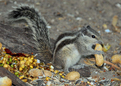
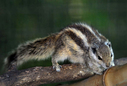
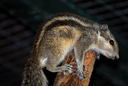
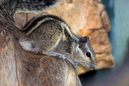
Adult weight is about 147 g. Body length ranges from 230 to 356 mm, including the tail. The tail alone makes up about half of the total body length. There is little known about the metabolic rate of northern palm squirrels. Some key physical features include the stripes on the back. There are typically 3 lightly colored stripes on the back. The top coat color ranges from grayish brown to almost black, while the head is usually grayish to reddish brown. (Nameer and Molur, 2008; Nowak, 1999; Corbet and Hill, 1992; Moore and Tate, 1965; Nameer and Molur, 2008; Nowak, 1999)
- Other Physical Features
- endothermic
- homoiothermic
- bilateral symmetry
-
- Average mass
- 147.7 g
- 5.21 oz
-
- Range length
- 230 to 356 mm
- 9.06 to 14.02 in
Reproduction
Northern palm squirrels are gregarious. Up to 10 animals have been seen in one tree at a time. Typically, multiple males fight over one female. The dominant male then mates with the female and leaves her within a couple of days. Breeding occurs several times a year, usually with different partners each time. (Nowak, 1999)
- Mating System
- polygynandrous (promiscuous)
Northern palm squirrels are able to reproduce throughout most, if not all, of the year. Females have 2 to 3 litters yearly. Litter sizes range from 1 to 5, with 3 being the norm. Females have a gestation period of 40 to 45 days. Birth mass of northern palm squirrels is typically about 7 g. The mother will nurse her young for about 2 months. Males and females reach sexual maturity between 6 and 11 months of age. Males mature closer to about 10 months, while females tend to reach sexual maturity at around 7 to 8 months of age. (Nameer and Molur, 2008; Nowak, 1999)
- Key Reproductive Features
- iteroparous
- year-round breeding
- gonochoric/gonochoristic/dioecious (sexes separate)
- sexual
- fertilization
- viviparous
-
- Breeding interval
- Northern palm squirrels breed 2 to 3 times per year. Usually, matings are separated by 4 to 5 months.
-
- Breeding season
- Mating can occur throughout the entire year. However, March to April and July to September are the times when most breeding occurs.
-
- Range number of offspring
- 1 to 5
-
- Range gestation period
- 40 to 45 days
-
- Average weaning age
- 2 months
-
- Average age at sexual or reproductive maturity (female)
- 8 months
-
- Average age at sexual or reproductive maturity (male)
- 10 months
Males do not help with the care of young and tend to leave the female 1 to 2 days after mating with her. Female invest heavily in young by building a large nest for them and nursing and protecting them for about 2 months. (Nowak, 1999)
- Parental Investment
- altricial
-
pre-fertilization
- provisioning
-
protecting
- female
-
pre-hatching/birth
-
provisioning
- female
-
protecting
- female
-
provisioning
-
pre-weaning/fledging
-
provisioning
- female
-
protecting
- female
-
provisioning
Lifespan/Longevity
Little is known about the maximum or expected lifespan of northern palm squirrels. However, one individual lived for nearly 5 years in captivity and was then released into the wild at the age of 6 to 7 years old. (Nowak, 1999)
Behavior
Northern palm squirrels are gregarious, living with up to 10 other individuals in the same tree. They are very active animals, spending much of their day foraging for food. They are mostly arboreal but it is fairly common to see these animals foraging on the ground. Most activity, including foraging, breeding, playing, etc. occurs during daylight. (Nowak, 1999)
Home Range
Males typically have larger home ranges of about 0.21 ha, females have home ranges of around 0.15 ha. (Nowak, 1999)
Communication and Perception
Northern palm squirrels use sight, touch, smell, and acoustics to perceive their environment. They use sight, touch, and smell for finding food. Sounds and visual displays are used in intraspecific communication. Northern palm squirrels are known for their repetitive, shrill, bird-like calls. Use of scent marking or pheromones is not reported in the literature. (Mitchell, 1979)
Food Habits
Northern palm squirrels are herbivorous and omnivorous. They typically feed on a wide variety of foods including seeds, nuts, buds, young bark, leaves, insects, flowers, and grubs. They have also been known to eat baby birds. They feed both in trees and on the ground. They store food for later use. (Nowak, 1999)
- Primary Diet
- omnivore
- Animal Foods
- birds
- insects
- Plant Foods
- leaves
- wood, bark, or stems
- seeds, grains, and nuts
- fruit
- flowers
- Foraging Behavior
- stores or caches food
Predation
Nothing is known about predation on northern palm squirrels, but golden eagles and other raptors are found in the same region and are likely predators of these squirrels. Large snakes and other terrestrial predators may also prey on northern palm squirrels.
- Anti-predator Adaptations
- cryptic
-
- Known Predators
-
- golden eagles (Aquila chrysaetos)
- raptors (Falconiformes)
Ecosystem Roles
Nothing is known about the role that northern palm squirrels play in the ecosystem. However, they probably play an important role in the spread of seeds, they provide food for birds of prey, and they may pollinate some plants.
- Ecosystem Impact
- disperses seeds
- pollinates
Economic Importance for Humans: Positive
Northern palm squirrels have a special liking for the nectar of silky oaks (Grevillea robusta) and while acquiring it become covered in the powdery pollen of these plants. They may play a role in the pollination of these trees, which are non-native in the range of northern palm squirrels. Also, they may play a role in the pollination and seed dispersal of plantation trees, where they are common. Northern palm squirrels could be hunted and used as a food source for humans if needed. (Nowak, 1999)
- Positive Impacts
- food
- pollinates crops
Economic Importance for Humans: Negative
Northern palm squirrels have a tendency to live on plantations and around farm lands, so they can be a pest when it comes to eating buds and seeds of food producing plants. They are also known to eat cocoa pods and can damage twigs of important plants. (Nowak, 1999)
- Negative Impacts
- crop pest
Conservation Status
Northern palm squirrels are listed by the IUCN Red List as Least Concern. This is likely due to their wide distribution and ability to easily adapt to disturbed habitats. There also seem to be large populations of northern palm squirrels in protected areas. Therefore, there currently seems to be little threat to this species. (Nameer and Molur, 2008)
-
- IUCN Red List
-
Least Concern
More information
-
- IUCN Red List
-
Least Concern
More information
-
- US Federal List
- No special status
-
- CITES
- No special status
Contributors
Janeen Stalder (author), Michigan State University, Barbara Lundrigan (editor, instructor), Michigan State University, Tanya Dewey (editor), Animal Diversity Web.
Glossary
- Palearctic
-
living in the northern part of the Old World. In otherwords, Europe and Asia and northern Africa.

- acoustic
-
uses sound to communicate
- agricultural
-
living in landscapes dominated by human agriculture.
- altricial
-
young are born in a relatively underdeveloped state; they are unable to feed or care for themselves or locomote independently for a period of time after birth/hatching. In birds, naked and helpless after hatching.
- arboreal
-
Referring to an animal that lives in trees; tree-climbing.
- bilateral symmetry
-
having body symmetry such that the animal can be divided in one plane into two mirror-image halves. Animals with bilateral symmetry have dorsal and ventral sides, as well as anterior and posterior ends. Synapomorphy of the Bilateria.
- chemical
-
uses smells or other chemicals to communicate
- cryptic
-
having markings, coloration, shapes, or other features that cause an animal to be camouflaged in its natural environment; being difficult to see or otherwise detect.
- diurnal
-
- active during the day, 2. lasting for one day.
- endothermic
-
animals that use metabolically generated heat to regulate body temperature independently of ambient temperature. Endothermy is a synapomorphy of the Mammalia, although it may have arisen in a (now extinct) synapsid ancestor; the fossil record does not distinguish these possibilities. Convergent in birds.
- fertilization
-
union of egg and spermatozoan
- food
-
A substance that provides both nutrients and energy to a living thing.
- forest
-
forest biomes are dominated by trees, otherwise forest biomes can vary widely in amount of precipitation and seasonality.
- introduced
-
referring to animal species that have been transported to and established populations in regions outside of their natural range, usually through human action.
- iteroparous
-
offspring are produced in more than one group (litters, clutches, etc.) and across multiple seasons (or other periods hospitable to reproduction). Iteroparous animals must, by definition, survive over multiple seasons (or periodic condition changes).
- motile
-
having the capacity to move from one place to another.
- native range
-
the area in which the animal is naturally found, the region in which it is endemic.
- omnivore
-
an animal that mainly eats all kinds of things, including plants and animals
- oriental
-
found in the oriental region of the world. In other words, India and southeast Asia.
- polygynandrous
-
the kind of polygamy in which a female pairs with several males, each of which also pairs with several different females.
- rainforest
-
rainforests, both temperate and tropical, are dominated by trees often forming a closed canopy with little light reaching the ground. Epiphytes and climbing plants are also abundant. Precipitation is typically not limiting, but may be somewhat seasonal.
- scrub forest
-
scrub forests develop in areas that experience dry seasons.
- sedentary
-
remains in the same area
- sexual
-
reproduction that includes combining the genetic contribution of two individuals, a male and a female
- social
-
associates with others of its species; forms social groups.
- stores or caches food
-
places a food item in a special place to be eaten later. Also called "hoarding"
- suburban
-
living in residential areas on the outskirts of large cities or towns.
- tactile
-
uses touch to communicate
- terrestrial
-
Living on the ground.
- tropical
-
the region of the earth that surrounds the equator, from 23.5 degrees north to 23.5 degrees south.
- tropical savanna and grassland
-
A terrestrial biome. Savannas are grasslands with scattered individual trees that do not form a closed canopy. Extensive savannas are found in parts of subtropical and tropical Africa and South America, and in Australia.
- savanna
-
A grassland with scattered trees or scattered clumps of trees, a type of community intermediate between grassland and forest. See also Tropical savanna and grassland biome.
- temperate grassland
-
A terrestrial biome found in temperate latitudes (>23.5° N or S latitude). Vegetation is made up mostly of grasses, the height and species diversity of which depend largely on the amount of moisture available. Fire and grazing are important in the long-term maintenance of grasslands.
- urban
-
living in cities and large towns, landscapes dominated by human structures and activity.
- visual
-
uses sight to communicate
- viviparous
-
reproduction in which fertilization and development take place within the female body and the developing embryo derives nourishment from the female.
- year-round breeding
-
breeding takes place throughout the year
References
Corbet, G., J. Hill. 1992. The Mammals of the Indomalayan Region: A Systematic Review. USA: Oxford University Press.
Mitchell, R. 1979. The sciurid rodents (Rodentia: Sciuridae) of Nepal. J. Asian Ecology, 1: 21-28.
Moore, J., G. Tate. 1965. A study of the diurnal squirrels, Sciurinae, of the Indian and Indochinese subregions. Fieldiana Zoology, 48: 1-351.
Nameer, P., S. Molur. 2008. "Funambulus pennantii" (On-line). Accessed March 16, 2009 at http://www.iucnredlist.org/details/8702.
Nowak, R. 1999. Walker's Mammals of the World. Baltimore: Johns Hopkins University Press.