ClinidaeClinids
Diversity
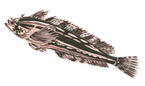
The Clinidae family is widely variable. Most sources estimate about 20 genera and 75 species, with some casting a more inclusive net to arrive at around 40 genera and 180 species. While most notable for their diversity, clinids tend to have spines on the dorsal fin and hair-like growths around the head called cirri, sometimes pronounced enough to give the fish its common name, as in the case of the sarcastic fringehead. For the most part cryptically marked bottom feeders, many clinids change color near spawning time. Many are egg-layers, but some give birth to live young. (Böhlke and Chaplin, 1994; Moyle and Cech, 2000; Nelson, 1994; Springer, 1998; Thresher, 1984; Wheeler, 1975)
Geographic Range
Clinids primarily occur along temperate coasts in both northern and southern hemispheres. Many species are found in the waters of southern Australia and southern Africa, where they have in many regions become the dominant intertidal fishes. They also inhabit areas of the Bahamas, the Indian Ocean, and the Pacific coast of the United States. (Böhlke and Chaplin, 1994; Moyle and Cech, 2000; Nelson, 1994; Springer, 1998; Wheeler, 1975)
- Biogeographic Regions
- nearctic
- palearctic
- oriental
- ethiopian
- neotropical
- australian
- indian ocean
- atlantic ocean
- pacific ocean
Habitat
A marine family, clinids are mostly bottom-dwellers (benthic) (see an exception below in Predation). They occupy various habitats in shallow water, including tide pools, coastal reefs, under stones, or amongst sea grass or algae. They are mostly found in intertidal zones of temperate waters and tend to live in close association with seaweed. (Böhlke and Chaplin, 1994; Helfman, et al., 1997; Moyle and Cech, 2000; Nelson, 1994; Springer, 1998; Wheeler, 1975)
- Habitat Regions
- temperate
- saltwater or marine
- Other Habitat Features
- intertidal or littoral
Systematic and Taxonomic History
The Clinidae family has been divided into the following three tribes: Ophiclinini, which contains four genera and 12 species, Clinini, encompassing 11 genera and about 52 species, and Myxodini, with five genera and about nine species. Böhlke and Chaplin (1994) include certain fishes in the Clinidae family that many researchers attribute to other families, such as Emblemariidae and Chaenopsidae. (Böhlke and Chaplin, 1994; Nelson, 1994)
Physical Description
Clinids appear in a wide variety of shapes and forms. Most have small, round (cycloid), embedded scales, although some are scaleless. Their snouts are often pointed and their heads blunt. Other common elements may include the possession of fixed conical teeth and cirri, or fleshy hair-like projections, on the head. Clinids tend to have more spines than rays on the dorsal fin, which usually begins close to the head. The first few spines are often longer than the others and separated from the rest of the fin. Clinids tend to be cryptically colored to match their surrounding habitat. Most are small fish, measuring as little as 5 cm, but Heterostichus rostratus, or giant kelpfish, can reach 60 cm (Click here to see a fish diagram). (Böhlke and Chaplin, 1994; Helfman, et al., 1997; Moyle and Cech, 2000; Nelson, 1994; Springer, 1998; Thresher, 1984)

Clinids characteristically exhibit sexual dimorphism. In some genera, such as Labrisomus and Malacoctenus, the sexes have permanent color differences, with the male usually more colorful than the female. Such color differences may be due to each sex adapting to separate habitats. However, many clinids display temporary color differences during spawning seasons. Males in some species of Labrisomus and Paraclinus, for example, darken considerably during spawning and the female becomes almost white. Males and females in many clinid groups can be distinguished by minor differences in the form of the urogenital papilla. In some cases males are larger and have larger jaws than females. Intromittent organs are found on males of Starksia, as that genus is ovoviviparous. (Springer, 1998; Thresher, 1984)

- Other Physical Features
- ectothermic
- bilateral symmetry
- Sexual Dimorphism
- sexes colored or patterned differently
- male more colorful
- sexes shaped differently
Development
Most clinids lay eggs, but some bear live young. All clinids occurring in the Indo-West Pacific bear live young, while all the egg-laying species (7 or 8) occur variously within the eastern Pacific, Mediterranean, and Atlantic. The species for which information is available, Paraclinus marmoratus, hatches from its eggs after 10 days. Rate of development varies; some clinids have a planktonic stage lasting less than 24 hours, while others have an extended larval stage. Little is known about the development of starksiins, which bear live young. Apparently the fertilized eggs receive no nourishment from the mother, as do the eggs of some clinids. (Thresher, 1984)
Reproduction
Males of some clinids, such as Paraclinus marmoratus, may be sequentially polygynous. Evidence for this comes from the fact that eggs at different stages of development can be found in their nests, suggesting that multiple females deposited eggs in the nest. (For a description of color changes in clinids at spawning time, see Physical Description above.) (Thresher, 1984)
- Mating System
- polygynous
Reproductive habits in Clinidae are quite variable. Information on spawning seasons is limited, but the species studied spawn in spring, during the day. Some may spawn several times a year, and sperm storing may occur. In some species females lay eggs on a rocky surface, quivering vigorously to release them, and males then fertilize the eggs. Males guard females during spawning, chasing away other fish. He may stimulate her to continue spawning by touching her abdomen. When she leaves he may court another female (see Mating Systems). Some clinids, especially the Indo-West Pacific species, bear live young. These may be viviparous, in which case the mother’s body provides nourishment to the embryo, or ovoviviparous, in which case the eggs develop without additional nourishment inside the mother. Males in the live-bearing species have intromittent organs. (Helfman, et al., 1997; Moyle and Cech, 2000; Springer, 1998; Thresher, 1984; Wheeler, 1975)
- Key Reproductive Features
- iteroparous
- seasonal breeding
- gonochoric/gonochoristic/dioecious (sexes separate)
- sexual
- fertilization
- viviparous
- ovoviviparous
- oviparous
- sperm-storing
Male clinids often guard eggs after the female leaves, protecting them from predators, and may nudge the egg mass to achieve water flow through it. (Thresher, 1984; Thresher, 1984)
- Parental Investment
- male parental care
Lifespan/Longevity
In general most small reef fishes live between three and five years. (Moyle and Cech, 2000)
Behavior
Most clinids are territorial. They tend to be bottom dwellers and associate with seaweed, moving within an environment to which their coloring is adapted. Their coloring often changes during spawning. Males and females meet in order to spawn, with the male serving an active role in chasing away other fish, and he may stimulate her to continue spawning by touching her abdomen. In the Bahamas Hemiemblemaria swims freely with schools of wrasse, mimicking them. (Böhlke and Chaplin, 1994; Springer, 1998; Thresher, 1984)
- Key Behaviors
- natatorial
- motile
- territorial
- social
Communication and Perception
Communication during spawning has been observed in clinids, with the male darkening in response to the paling of the female. Forms of communication unrelated to spawning are not known. (Thresher, 1984)
Food Habits
Clinids are primarily carnivorous bottom-feeders who consume small fishes and invertebrates from worms to crustaceans. (Böhlke and Chaplin, 1994; Springer, 1998; Wheeler, 1975)
- Primary Diet
-
carnivore
- piscivore
- eats non-insect arthropods
- molluscivore
- herbivore
- omnivore
Predation
Clinids are usually cryptically marked to avoid detection by predators. Colors vary in order to match the fishes’ background. In the Bahamas Hemiemblemaria swims with schools of wrasse, mimicking them. Male clinids chase away other fish while spawning, and often guard the nest of eggs. (Böhlke and Chaplin, 1994; Moyle and Cech, 2000; Springer, 1998; Thresher, 1984)
- Anti-predator Adaptations
- mimic
- cryptic
Ecosystem Roles
Clinids are the dominant fishes in some temperate intertidal regions. They live in association with kelp beds where they help regulate populations of their prey, which are mostly small fishes and invertebrates from worms to crustaceans. (Moyle and Cech, 2000; Wheeler, 1975)
Economic Importance for Humans: Positive
The brilliant markings of some clinids could make them valuable in the aquarium trade, and many could be easy to raise in captivity, but this has not been done so far. (Thresher, 1984)
- Positive Impacts
- pet trade
Economic Importance for Humans: Negative
No specific information was found concerning any negative impacts to humans.
Conservation Status
Currently, there is no known conservation threat to any member of this family. (The World Conservation Union, 2002)
-
- IUCN Red List [Link]
- Not Evaluated
Other Comments
The first fossil record of clinids dates to the lower Tertiary and middle Eocene periods. (Berg, 1958)
Contributors
R. Jamil Jonna (author), Animal Diversity Web.
Monica Weinheimer (author), Animal Diversity Web.
Glossary
- Atlantic Ocean
-
the body of water between Africa, Europe, the southern ocean (above 60 degrees south latitude), and the western hemisphere. It is the second largest ocean in the world after the Pacific Ocean.

- Australian
-
Living in Australia, New Zealand, Tasmania, New Guinea and associated islands.
- Ethiopian
-
living in sub-Saharan Africa (south of 30 degrees north) and Madagascar.
- Nearctic
-
living in the Nearctic biogeographic province, the northern part of the New World. This includes Greenland, the Canadian Arctic islands, and all of the North American as far south as the highlands of central Mexico.
- Neotropical
-
living in the southern part of the New World. In other words, Central and South America.
- Pacific Ocean
-
body of water between the southern ocean (above 60 degrees south latitude), Australia, Asia, and the western hemisphere. This is the world's largest ocean, covering about 28% of the world's surface.
- Palearctic
-
living in the northern part of the Old World. In otherwords, Europe and Asia and northern Africa.
- bilateral symmetry
-
having body symmetry such that the animal can be divided in one plane into two mirror-image halves. Animals with bilateral symmetry have dorsal and ventral sides, as well as anterior and posterior ends. Synapomorphy of the Bilateria.
- carnivore
-
an animal that mainly eats meat
- chemical
-
uses smells or other chemicals to communicate
- coastal
-
the nearshore aquatic habitats near a coast, or shoreline.
- cryptic
-
having markings, coloration, shapes, or other features that cause an animal to be camouflaged in its natural environment; being difficult to see or otherwise detect.
- ectothermic
-
animals which must use heat acquired from the environment and behavioral adaptations to regulate body temperature
- external fertilization
-
fertilization takes place outside the female's body
- fertilization
-
union of egg and spermatozoan
- herbivore
-
An animal that eats mainly plants or parts of plants.
- intertidal or littoral
-
the area of shoreline influenced mainly by the tides, between the highest and lowest reaches of the tide. An aquatic habitat.
- iteroparous
-
offspring are produced in more than one group (litters, clutches, etc.) and across multiple seasons (or other periods hospitable to reproduction). Iteroparous animals must, by definition, survive over multiple seasons (or periodic condition changes).
- male parental care
-
parental care is carried out by males
- molluscivore
-
eats mollusks, members of Phylum Mollusca
- motile
-
having the capacity to move from one place to another.
- natatorial
-
specialized for swimming
- native range
-
the area in which the animal is naturally found, the region in which it is endemic.
- omnivore
-
an animal that mainly eats all kinds of things, including plants and animals
- oriental
-
found in the oriental region of the world. In other words, India and southeast Asia.
- oviparous
-
reproduction in which eggs are released by the female; development of offspring occurs outside the mother's body.
- ovoviviparous
-
reproduction in which eggs develop within the maternal body without additional nourishment from the parent and hatch within the parent or immediately after laying.
- pelagic
-
An aquatic biome consisting of the open ocean, far from land, does not include sea bottom (benthic zone).
- pet trade
-
the business of buying and selling animals for people to keep in their homes as pets.
- piscivore
-
an animal that mainly eats fish
- polygynous
-
having more than one female as a mate at one time
- reef
-
structure produced by the calcium carbonate skeletons of coral polyps (Class Anthozoa). Coral reefs are found in warm, shallow oceans with low nutrient availability. They form the basis for rich communities of other invertebrates, plants, fish, and protists. The polyps live only on the reef surface. Because they depend on symbiotic photosynthetic algae, zooxanthellae, they cannot live where light does not penetrate.
- saltwater or marine
-
mainly lives in oceans, seas, or other bodies of salt water.
- seasonal breeding
-
breeding is confined to a particular season
- sexual
-
reproduction that includes combining the genetic contribution of two individuals, a male and a female
- social
-
associates with others of its species; forms social groups.
- sperm-storing
-
mature spermatozoa are stored by females following copulation. Male sperm storage also occurs, as sperm are retained in the male epididymes (in mammals) for a period that can, in some cases, extend over several weeks or more, but here we use the term to refer only to sperm storage by females.
- tactile
-
uses touch to communicate
- temperate
-
that region of the Earth between 23.5 degrees North and 60 degrees North (between the Tropic of Cancer and the Arctic Circle) and between 23.5 degrees South and 60 degrees South (between the Tropic of Capricorn and the Antarctic Circle).
- territorial
-
defends an area within the home range, occupied by a single animals or group of animals of the same species and held through overt defense, display, or advertisement
- visual
-
uses sight to communicate
- viviparous
-
reproduction in which fertilization and development take place within the female body and the developing embryo derives nourishment from the female.
References
Berg, L. 1958. System Der Rezenten und Fossilen Fischartigen und Fische. Berlin: VEB Deutscher Verlag der Wissenschaften.
Böhlke, J., C. Chaplin. 1994. Fishes of the Bahamas and Adjacent Tropical Waters. Wynnewood, PA: Published for the Academy of Natural Sciences of Philadelphia by Livingston.
Froese, R., D. Pauly, D. Woodland. 2003. "Fish Base" (On-line). FishBase World Wide Web electronic publication. Accessed July 20, 2003 at http://www.fishbase.org/.
Helfman, G., B. Collete, D. Facey. 1997. The Diversity of Fishes. Malden, MA: Blackwell.
Moyle, P., J. Cech. 2000. Fishes: An introduction to ichthyology – fourth edition. Upper Saddle River, NJ: Prentice-Hall.
Nelson, J. 1994. Fishes of the World – third edition. New York, NY: John Wiley and Sons.
Springer, V. 1998. Blennies. Pp. 216 in W Eschmeyer, J Paxton, eds. Encyclopedia of Fishes – second edition. San Diego, CA: Academic Press.
The World Conservation Union, 2002. "IUCN 2002" (On-line). 2002 IUCN Red List of Threatened Species. Accessed July 20, 2003 at http://www.iucnredlist.org/.
Thresher, R. 1984. Reproduction in Reef Fishes. Neptune City, NJ: T.F.H. Publications.
Wheeler, A. 1975. Fishes of the World, an Illustrated Dictionary. London: Ferndale Editions.