Cheirogaleidaedwarf lemurs and mouse lemurs(Also: fork-marked lemur)


Diversity
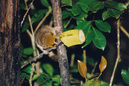
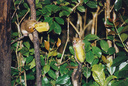
There are 21 species in 5 genera in the family Cheirogaleidae. As with most Malagasy mammals, recent research has resulted in the naming of several new species in recent years. These are the smallest lemur species and are all arboreal, nocturnal, and social. They are all similar in ecology, with relatively restricted ranges and some variation in diets. (Groves, 1989; Martin, 2003; Nowak and Paradiso, 1983; Thorington and Anderson, 1984; Vaughan, et al., 2000)
Geographic Range
Dwarf and mouse lemurs are restricted to forested regions of Madagascar. (Martin, 2003; Nowak and Paradiso, 1983; Vaughan, et al., 2000)
- Other Geographic Terms
- island endemic
Habitat
Dwarf and mouse lemurs are found in forested habitats of different types, including evergreen, deciduous, and scrub forests. Mouse lemurs (Microcebus) are also found in suburban and agricultural areas. Dwarf and mouse lemurs rest during the day in tree hollows or rounded leaf nests in Microcebus and Mirza species. (Martin, 2003; Nowak and Paradiso, 1983; Vaughan, et al., 2000)
- Habitat Regions
- tropical
- terrestrial
- Terrestrial Biomes
- forest
- rainforest
- scrub forest
- Other Habitat Features
- suburban
- agricultural
- riparian
Physical Description
Dwarf and mouse lemurs are the smallest lemurs, from 12 to 27 cm in length and 30 (Microcebus berthae) to 460 g (Phaner furcifer). Pygmy, or Berthe's, mouse lemurs (Microcebus berthae) are the smallest primates. Cheirogaleids have gray or brown dorsal pelage and lighter, creamy or yellowish pelage on their ventral surfaces. Some species have bold markings on their faces, such as eye rings or nose stripes. The fur is often thick and woolly. In general species in eastern Madagascar (more mesic forests) have reddish or brown fur and species in western Madagascar (more arid forests) have grayish fur. Dwarf and mouse lemurs are characterized by unusually long tails, ranging from about the length of the body to roughly half again as long; large, thin, and membranous ears; and well developed facial and carpal vibrissae. They have large, forward-facing eyes, reflecting their nocturnal lifestyle, compact bodies, and long, delicate fingers with rounded tips. In many species males are slightly larger than females. (Martin, 2003; Nowak and Paradiso, 1983; Vaughan, et al., 2000)
Their hind feet have elongated calcaneus and navicular bones. As with other strepsirhines, they have a distinctive " toilet claw" on the second digit of their hind feet. Their thumb (pollex) is not as conspicuously separated from the other digits as in lemurs; and the third and fourth digits of both feet are similar in length. (Feldhamer, et al., 1999; Groves, 1989; Nowak and Paradiso, 1983; Szalay and Dodson, 1979; Thorington and Anderson, 1984; Vaughan, et al., 2000)
Cranially, dwarf and mouse lemurs are defined by details of their cranial circulation and bullae. The frontal and palatal bones contact the orbit in most cheirogaleids. They have the typical strepsirhine tooth comb made up of lower incisors and canines, and their dental formula is 2/2, 1/1, 3/3, 3/3 = 36. In contrast to lemurs, their upper incisors are elongate. Hypocones are small are absent on the upper molars. (Feldhamer, et al., 1999; Groves, 1989; Nowak and Paradiso, 1983; Szalay and Dodson, 1979; Thorington and Anderson, 1984; Vaughan, et al., 2000)
- Other Physical Features
- endothermic
- heterothermic
- homoiothermic
- bilateral symmetry
- Sexual Dimorphism
- sexes alike
- male larger
Reproduction
Some species are generally found in monogamous family groups (Cheirogaleus, Phaner, Mirza). Microcebus species occur in multi-male, multi-female social groups in which males pursue females when they are in estrous. Males use mating calls during the time of breeding. Females can have multiple male mates and give birth to litters with multiple paternity as a result. Females have distinct estrous cycles. In some species the vagina is sealed with a membrane when the female is not in estrous. A vaginal plug forms after copulation in some species. Estrous is signaled by swelling of the vulva. (Martin, 2003; Nowak and Paradiso, 1983; Vaughan, et al., 2000)
- Mating System
- monogamous
- polygynandrous (promiscuous)
Dwarf and mouse lemurs breed seasonally, generally during the wet season from October to March. Smaller species can have multiple litters in a year, each with 2 to 3 young, larger species give birth to single offspring. Gestation is from 2 to 3 months and the young are cared for in a nest. (Martin, 2003; Nowak and Paradiso, 1983; Vaughan, et al., 2000)
- Key Reproductive Features
- iteroparous
- seasonal breeding
- gonochoric/gonochoristic/dioecious (sexes separate)
- sexual
- viviparous
Females nurse their young regularly throughout the day, making it necessary for them to return to the nest throughout their nighttime foraging period. (Martin, 2003)
- Parental Investment
- altricial
-
pre-fertilization
- provisioning
-
protecting
- female
-
pre-hatching/birth
-
provisioning
- female
-
protecting
- female
-
provisioning
-
pre-weaning/fledging
-
provisioning
- female
-
protecting
- female
-
provisioning
Lifespan/Longevity
Dwarf lemurs (Cheirogaleus) have been recorded living up to 23.2 years old and fork-marked lemurs (Phaner furcifer) have been recorded living up to 25 years in captivity. Longevity in the wild has not been well documented and is likely to be shorter than captive lifespans.
Behavior
Dwarf and mouse lemurs are all nocturnal and arboreal. They generally forage on their own, but roost during the day in small social groups and re-connect with other members of their social groups periodically throughout the night. Social organization varies among species, with some species (Microcebus, for example) being found in multi-male, multi-female groups and others (Cheirogaleus, for example) occurring in monogamous family units. Multi-male, multi-female groups are relatively loosely structured, with individuals having overlapping home ranges. Species that occur in relatively monogamous family units may cooperate to defend territories. Smaller species may become torpid occasionally and their body temperatures are labile, lowering when they sleep and rising when active. Fat is stored in the tail during rainy seasons to help individuals make it through dry seasons or times of torpor. Cheirogaleus species in arid habitats may aestivate for up to 6 months. Cheirogaleids get around with bipedal leaps and quadrupedal locomotion on branches. (Martin, 2003; Nowak and Paradiso, 1983; Vaughan, et al., 2000)
Communication and Perception
Individuals in social groups communicate with each other through scent marking and vocalizations. Scent marking involves leaving urine, feces, and gland secretions on trees and branches. Vocalizations include contact calls, alarm calls, and territorial defense calls, most are relatively high pitched sounds. (Martin, 2003)
- Other Communication Modes
- scent marks
Food Habits
Dwarf and mouse lemurs are generally omnivorous, eating fruits, insects, nectars, plant gums, and occasionally leaves and small vertebrates. Some species specialize on portions of that diet. For example, Cheirogaleus species eat mainly fruit and Phaner species specialize on plant gums and have a well-developed tooth comb in the lower jaw for this purpose. Most species forage mainly on the small branches of trees and shrubs below 10 m high, but they also forage on tree trunks, especially Phaner species, which have sharp claws on their digits to allow clinging to vertical surfaces. Phaner species also have an enlarged caecum to help them digest plant gums. (Martin, 2003; Nowak and Paradiso, 1983; Vaughan, et al., 2000)
- Primary Diet
- omnivore
Predation
Predators of cheirogaleids are not reported in the literature, but are likely to include nocturnal predators, such as snakes (Serpentes), owls (Strigiformes), and fossas (Cryptoprocta ferox). They are nocturnal, cryptically colored, arboreal, and agile, all helping to decrease their vulnerability to predators. (Vaughan, et al., 2000)
- Anti-predator Adaptations
- cryptic
Ecosystem Roles
Through their frugivory, cheirogaleids may help to disperse seeds. They also impact insect populations through predation.
- Ecosystem Impact
- disperses seeds
Economic Importance for Humans: Positive
Dwarf and mouse lemurs are too small to be hunted for food to a great extent. They may help to disperse seeds in forests and control insect pests to some extent. (Martin, 2003; Nowak and Paradiso, 1983)
- Positive Impacts
- controls pest population
Economic Importance for Humans: Negative
There are no adverse effects of dwarf and mouse lemurs on humans.
Conservation Status
Most dwarf and mouse lemur species are considered "data deficient" by the IUCN, primarily because many species are newly named and poorly understood. Of the 29 species recognized by the IUCN, 14 species are data deficient, 7 are least concern, 1 is near threatened, 2 are vulnerable, and 4 are endangered. Species considered least concern are still considered potentially vulnerable to habitat destruction and populations are thought to be in decline. Smaller species tend to be more common and widespread, larger species tend to have fragmentary distributions and are less common, therefore more threatened. Previously, all lemurs were considered endangered, so they are all listed on Appendix I of CITES. (IUCN, 2009; Martin, 2003)
Hairy-eared dwarf lemurs (Allocebus trichotis) were considered extinct until they were rediscovered in 1989. (Vaughan, et al., 2000)
-
- IUCN Red List [Link]
- Not Evaluated
Other Comments
There are no Cheirogaleidae fossils, although they are known from subfossil deposits on Madagascar. An Eocene fossil genus from Pakistan, Bugtilemur, is considered part of Cheirogaleidae. (Martin, 2003)
Contributors
Tanya Dewey (author), Animal Diversity Web.
Phil Myers (author), Museum of Zoology, University of Michigan-Ann Arbor.
Glossary
- Ethiopian
-
living in sub-Saharan Africa (south of 30 degrees north) and Madagascar.

- acoustic
-
uses sound to communicate
- agricultural
-
living in landscapes dominated by human agriculture.
- altricial
-
young are born in a relatively underdeveloped state; they are unable to feed or care for themselves or locomote independently for a period of time after birth/hatching. In birds, naked and helpless after hatching.
- arboreal
-
Referring to an animal that lives in trees; tree-climbing.
- bilateral symmetry
-
having body symmetry such that the animal can be divided in one plane into two mirror-image halves. Animals with bilateral symmetry have dorsal and ventral sides, as well as anterior and posterior ends. Synapomorphy of the Bilateria.
- chemical
-
uses smells or other chemicals to communicate
- cryptic
-
having markings, coloration, shapes, or other features that cause an animal to be camouflaged in its natural environment; being difficult to see or otherwise detect.
- endothermic
-
animals that use metabolically generated heat to regulate body temperature independently of ambient temperature. Endothermy is a synapomorphy of the Mammalia, although it may have arisen in a (now extinct) synapsid ancestor; the fossil record does not distinguish these possibilities. Convergent in birds.
- forest
-
forest biomes are dominated by trees, otherwise forest biomes can vary widely in amount of precipitation and seasonality.
- heterothermic
-
having a body temperature that fluctuates with that of the immediate environment; having no mechanism or a poorly developed mechanism for regulating internal body temperature.
- island endemic
-
animals that live only on an island or set of islands.
- iteroparous
-
offspring are produced in more than one group (litters, clutches, etc.) and across multiple seasons (or other periods hospitable to reproduction). Iteroparous animals must, by definition, survive over multiple seasons (or periodic condition changes).
- monogamous
-
Having one mate at a time.
- motile
-
having the capacity to move from one place to another.
- native range
-
the area in which the animal is naturally found, the region in which it is endemic.
- nocturnal
-
active during the night
- omnivore
-
an animal that mainly eats all kinds of things, including plants and animals
- polygynandrous
-
the kind of polygamy in which a female pairs with several males, each of which also pairs with several different females.
- rainforest
-
rainforests, both temperate and tropical, are dominated by trees often forming a closed canopy with little light reaching the ground. Epiphytes and climbing plants are also abundant. Precipitation is typically not limiting, but may be somewhat seasonal.
- riparian
-
Referring to something living or located adjacent to a waterbody (usually, but not always, a river or stream).
- scent marks
-
communicates by producing scents from special gland(s) and placing them on a surface whether others can smell or taste them
- scrub forest
-
scrub forests develop in areas that experience dry seasons.
- seasonal breeding
-
breeding is confined to a particular season
- sedentary
-
remains in the same area
- sexual
-
reproduction that includes combining the genetic contribution of two individuals, a male and a female
- social
-
associates with others of its species; forms social groups.
- suburban
-
living in residential areas on the outskirts of large cities or towns.
- tactile
-
uses touch to communicate
- terrestrial
-
Living on the ground.
- territorial
-
defends an area within the home range, occupied by a single animals or group of animals of the same species and held through overt defense, display, or advertisement
- tropical
-
the region of the earth that surrounds the equator, from 23.5 degrees north to 23.5 degrees south.
- visual
-
uses sight to communicate
- viviparous
-
reproduction in which fertilization and development take place within the female body and the developing embryo derives nourishment from the female.
References
Feldhamer, G., L. Drickamer, S. Vessey, J. Merritt. 1999. Adaptation, Diversity, and Ecology. Boston: WCB McGraw-Hill.
Groves, C. 1989. A Theory of Human and Primate Evolution. Oxford: Oxford Science Publications, Clarendon Press.
IUCN, 2009. "IUCN Redlist of Threatened Species" (On-line). Accessed July 27, 2009 at http://www.iucnredlist.org/.
Martin, R. 2003. Dwarf lemurs and mouse lemurs (Cheirogaleidae). Pp. 35-45 in M Hutchins, A Evans, J Jackson, D Kleiman, J Murphy, D Thoney, eds. Grzimek Animal Life Encyclopedia, Vol. 14, 2nd Edition. Detroit: Gale Group.
Nowak, R., J. Paradiso. 1983. Walker's Mammals of the World, Fourth edition. Baltimore, London: John Hopkins University Press.
Szalay, F., E. Dodson. 1979. Evolutionary History of the Primates. New York: Academic Press.
Thorington, R., S. Anderson. 1984. Primates. Pp. 187-216 in S Anderson, J Jones, eds. Orders and Families of Recent Mammals of the World. New York: John Wiley and Sons.
Vaughan, T., J. Ryan, N. Czaplewski. 2000. Mammalogy, Fourth Edition. Philadelphia: Saunders College Publishing.
de Magalhães, J. 2009. "The animal ageing and longevity database" (On-line). Accessed July 27, 2009 at http://genomics.senescence.info.