Cephalopoda
Identification
Location
Luzon Island, Philippines
Caption
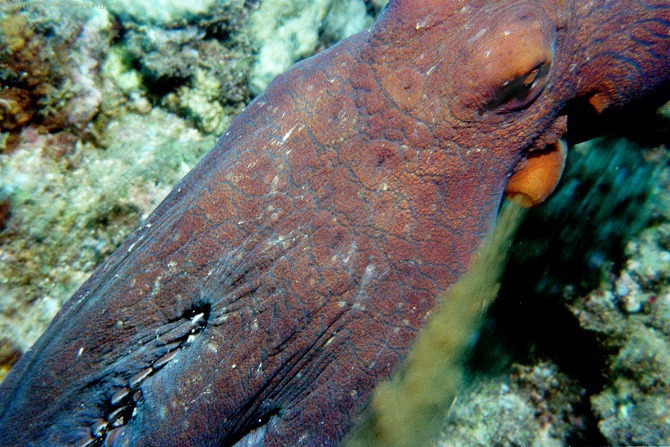
I was following this 18-24 inch (45-60 cm) octopus for about ten minutes before it decided it no longer desired my company. An octopus will try bluffing or crawling away from a potential predator first, or if more desperate measures are needed, it uses its siphon to rapidly squirt jets of water for a quick escape. As a last resort, a store of "ink" is used to cloud the water, confusing the predator's sense of sight and smell.
- Subject
- Live Animal
- Type
- Photo
- Anatomy
- Coloration/Patterning :: Cryptic
- Behaviors
- Communication :: Aggressive Display
- Life Stages And Gender
- Adult/Sexually Mature
- Behaviors
- Locomotion
Contributors
Jeffrey N. Jeffords (photographer; copyright holder; identification)
Conditions of Use

This work is licensed under a Creative Commons Attribution-NonCommercial-NoDerivs 3.0 Unported License.